

Which Food Businesses Are Most Profitable?
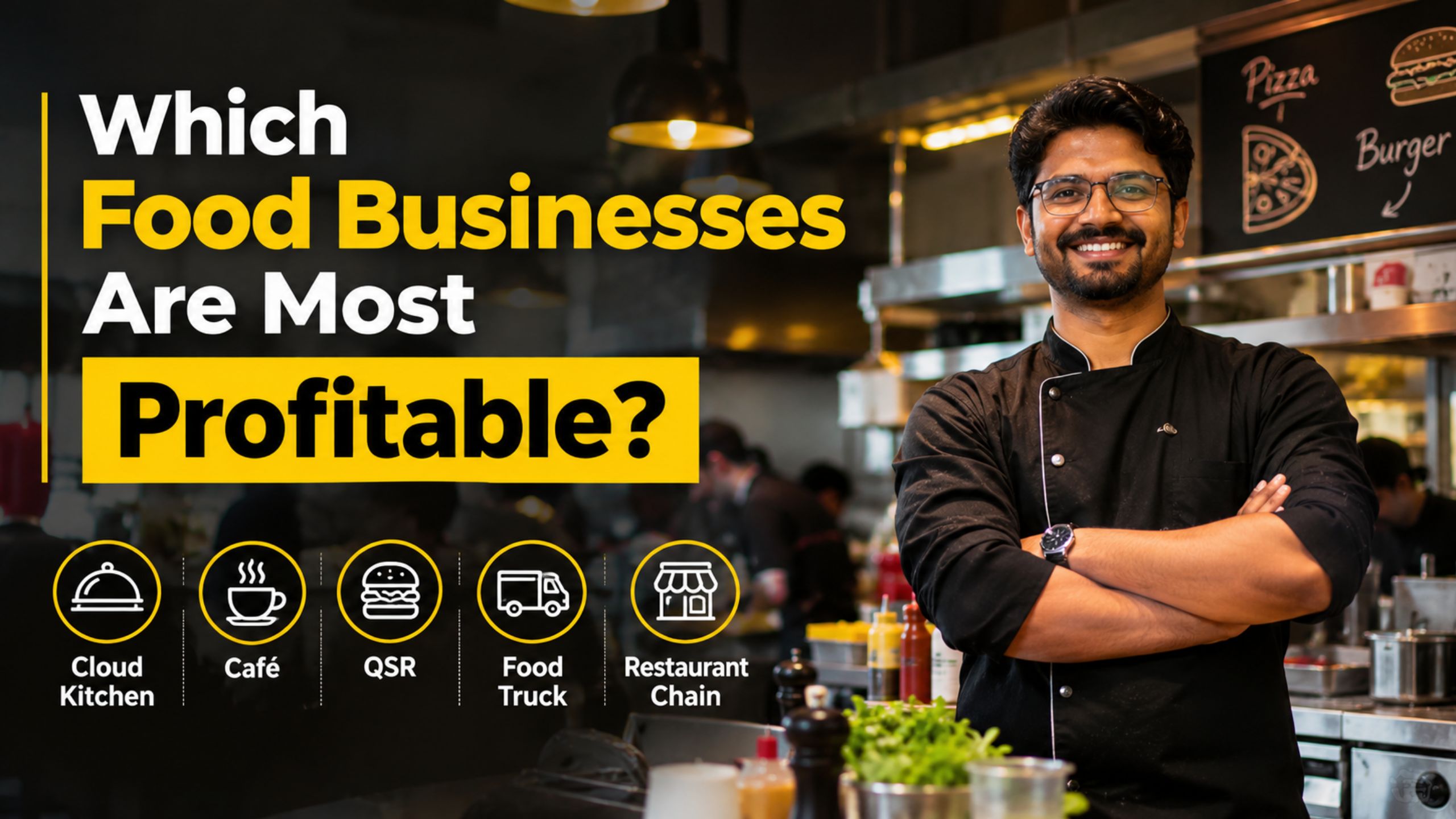
Which Food Businesses Are Most Profitable?
If you are planning to enter the food industry, one question matters more than anything else: Which Food Businesses Are Most Profitable? The answer depends on how much you can invest, where you want to operate and what people in that area regularly buy.
A small tea shop, tiffin service or street-food stall can be profitable with controlled expenses. A cloud kitchen, catering service or bakery may offer better opportunities to grow. However, high sales do not always mean high earnings. Food costs, rent, staff salaries, packaging, delivery commissions and wastage can reduce the money left at the end of the month.
For Indian entrepreneurs, the best approach is to choose a model that matches local demand and available resources instead of investing heavily in a business simply because it looks popular.
Which Food Businesses Are Most Profitable in India?
The most profitable food businesses in India are generally those that have regular demand, manageable operating costs and customers who return frequently. Cloud kitchens, tiffin services, street-food stalls, catering, bakeries and focused fast-food outlets can all work well when managed properly.
Here are some options worth considering:
1. Cloud Kitchen Business
A cloud kitchen business prepares food for online orders and takeaway without running a traditional dine-in restaurant. It can serve customers through food delivery platforms, direct orders or its own ordering system.
- Indicative investment: ₹2 lakh–₹10 lakh for a small independent setup. A franchise or managed model may have a different fee structure.
- Space and equipment: A compact commercial kitchen, cooking range, refrigerator, storage racks, preparation tables and packing area.
- Target customers: Office workers, students, families and people who regularly order food online.
- Major expenses: Ingredients, kitchen rent, salaries, packaging, delivery commissions, discounts and marketing.
- Profitability factors: Menu pricing, repeat orders, food quality, delivery radius and control over platform charges.
The cloud kitchen profit margin depends on the complete order cost, not just the difference between ingredient cost and menu price. Multiple food brands can also operate from one kitchen if they share ingredients, staff and equipment efficiently.
The Rolling Plate offers cloud kitchen and franchise models for people interested in operating food brands through delivery. You can understand the available cloud kitchen business models and compare its food franchise investment opportunities before deciding.
2. Street Food Business
A street food business can start with a focused menu such as momos, chaat, rolls, sandwiches, dosa or pav bhaji. It mainly depends on footfall and quick service.
- Indicative investment: ₹50,000–₹3 lakh for a basic cart or small stall.
- Space and equipment: A cart or small rented spot, cooking stove, utensils, storage containers and a display counter.
- Target customers: Students, office workers, shoppers and local residents.
- Major expenses: Ingredients, fuel, stall rent, packaging, helper wages and daily transport.
- Profitability factors: High-footfall location, affordable pricing, quick preparation and low food wastage.
Its main advantage is a relatively low starting cost. The challenge is that sales can change with weather, local permissions and competition. A short menu with two or three popular products is often easier to manage than offering too many dishes.
3. Tiffin Service Business
A tiffin service business provides regular meals to people who do not have the time or facilities to cook. It can begin from a suitable home kitchen and expand through subscriptions.
- Indicative investment: ₹40,000–₹2.5 lakh for a small operation.
- Space and equipment: A clean kitchen, cooking utensils, refrigerator, food containers and packing supplies.
- Target customers: Working professionals, students, hostel residents and people living away from their families.
- Major expenses: Vegetables, grains, cooking gas, packaging, delivery and helper wages.
- Profitability factors: Monthly subscriptions, fixed meal plans, portion control and reliable delivery.
Regular customers make this model easier to forecast than a business that depends only on walk-in orders. However, late deliveries, inconsistent taste and food quality can quickly affect customer retention.
4. Catering Business
A catering business prepares food for weddings, office events, birthday parties, family functions and other gatherings. It can earn through individual bookings instead of depending entirely on daily walk-in sales.
- Indicative investment: ₹3 lakh–₹15 lakh, depending on equipment and event size.
- Space and equipment: A preparation kitchen, large cooking vessels, storage, serving equipment and transport arrangements.
- Target customers: Families, event organisers, companies, schools and institutions.
- Major expenses: Bulk ingredients, cooks, serving staff, transportation, equipment rental and event setup.
- Profitability factors: Advance bookings, guest-count accuracy, menu planning and control over leftovers.
Catering can generate good revenue from a single event, but demand may be seasonal. Always confirm the guest count, menu, payment schedule and cancellation terms before purchasing ingredients.
5. Bakery and Homemade Food Business
A bakery business can sell cakes, cookies, breads, pastries and customised desserts. A homemade food business can begin with products such as pickles, snacks, sweets, sauces or regional specialities.
- Indicative investment: ₹50,000–₹6 lakh for a home-based or small production setup.
- Space and equipment: An oven, mixer, refrigerator, preparation counter, storage and packaging material.
- Target customers: Families, birthday customers, gifting buyers, offices and local retailers.
- Major expenses: Ingredients, electricity, packaging, delivery, marketing and equipment maintenance.
- Profitability factors: Product quality, custom orders, shelf life, pricing and repeat purchases.
Custom cakes and made-to-order products can reduce unsold inventory. Packaged products may reach more customers, but they need proper labelling, storage and distribution planning.
6. Tea, Coffee and Juice Shops
A tea shop business or small coffee outlet can work near offices, colleges, markets and transport areas. A juice shop business may perform well in locations with demand for fresh drinks.
- Indicative investment: ₹60,000–₹5 lakh for a stall or kiosk; a larger café-style outlet can cost considerably more.
- Space and equipment: A counter, beverage machines, refrigerator, storage and washing area.
- Target customers: Commuters, students, office workers and shoppers.
- Major expenses: Milk, tea, coffee, fruits, cups, electricity, rent and staff.
- Profitability factors: Daily footfall, serving speed, ingredient prices and customer frequency.
These businesses can have attractive product-level margins, but location is critical. A low-cost tea stall with regular customers may perform better than an expensive coffee outlet with high rent and limited sales.
7. Food Truck Business
A food truck business sells prepared food from a fitted vehicle. It can operate near events, business areas, college zones and approved vending locations.
- Indicative investment: ₹5 lakh–₹15 lakh or more.
- Space and equipment: A suitable vehicle, fitted cooking area, exhaust, refrigeration, power supply and storage.
- Target customers: Event visitors, office workers, students and people in busy public areas.
- Major expenses: Vehicle purchase or lease, fuel, staff, ingredients, maintenance, permits and parking.
- Profitability factors: Legal vending locations, event bookings, menu speed and vehicle utilisation.
It offers flexibility, but vehicle maintenance, weather and permission to operate in different locations can create challenges.
8. Fast-Food Outlets, Cafes and Sweet Shops
A fast food business can focus on burgers, pizza, rolls, fried snacks or a limited quick-service menu. A cafe business usually combines beverages with snacks or desserts, while a sweet shop business sells traditional sweets and packaged products.
- Indicative investment: ₹3 lakh–₹20 lakh or more, depending on format, location and brand.
- Space and equipment: A rented shop, kitchen equipment, display counters, refrigeration, seating where required and storage.
- Target customers: Families, students, office workers, shoppers and local residents.
- Major expenses: Rent, staff, ingredients, electricity, packaging, maintenance and marketing.
- Profitability factors: Footfall, average order value, menu pricing, repeat customers and control over fixed costs.
A small focused outlet is usually easier to manage than a large menu with multiple preparation requirements. Franchising can provide an established brand and operating support, but franchise fees, royalty charges and agreement conditions must be checked carefully.
Food Business Comparison: Investment, Space and Profitability
The following table gives a practical starting comparison of different profitable food business ideas. These are indicative estimates for planning, not fixed quotations.
| Business model | Indicative investment | Space needed | Target audience | Major expenses and profitability factors |
|---|---|---|---|---|
| Street-food stall | ₹50,000–₹3 lakh | Cart or small stall | Students, shoppers | Ingredients, fuel, footfall and speed |
| Tiffin service | ₹40,000–₹2.5 lakh | Home or small kitchen | Students, professionals | Food, delivery and subscriptions |
| Home bakery | ₹50,000–₹4 lakh | Home kitchen | Families, gifting buyers | Ingredients, electricity and custom orders |
| Tea or juice kiosk | ₹60,000–₹5 lakh | Small counter | Commuters, office workers | Raw materials, location and daily sales |
| Cloud kitchen | ₹2 lakh–₹10 lakh | Compact kitchen | Online food customers | Rent, food cost and delivery charges |
| Catering | ₹3 lakh–₹15 lakh | Kitchen and storage | Events, companies | Labour, bulk food and bookings |
| Food truck | ₹5 lakh–₹15 lakh+ | Fitted vehicle | Event and market visitors | Vehicle, fuel and permissions |
| Cafe or restaurant | ₹8 lakh–₹30 lakh+ | Commercial outlet | Families, students, professionals | Rent, salaries and customer footfall |
Actual costs vary by city, property, business scale, equipment quality, staff strength, menu size and licences. Keep working capital separate from setup money.
Which Food Business Can You Start With Your Budget?
Your available capital should decide the size of your first setup. Avoid spending your entire budget on interiors, equipment or franchise fees.
Low investment (up to ₹2 lakh): Consider a tiffin service, home bakery, tea stall, limited street-food menu or homemade snacks. These models allow you to test demand without renting a large commercial space.
Medium investment (₹2 lakh–₹10 lakh): A small cloud kitchen, juice kiosk, catering setup, bakery or focused fast-food outlet may be suitable. Plan for rent, staff and at least a few months of operating expenses.
Higher investment (above ₹10 lakh): You can consider a food truck, larger cloud kitchen, cafe, sweet shop, restaurant or a suitable franchise. Compare the total investment with the expected sales capacity before signing an agreement.
A first-time owner may find a low investment food business easier to test and manage. Home-based entrepreneurs can begin with tiffin, bakery or packaged food products, subject to applicable food safety and local requirements.
Which Food Businesses Offer Higher Profit Margins?
Some products have a low ingredient cost compared with their selling price. Tea, coffee, selected beverages, snacks and certain bakery items may offer attractive gross margins. However, a food business with high profit margin does not automatically produce high monthly profit.
For example, a drink may have a good gross margin, but a shop selling only a few cups each day may struggle to pay rent and salaries. A tiffin service may have a lower margin per meal but earn more predictable revenue through monthly subscriptions.
Understand these four terms before comparing business models:
- Gross profit: Sales revenue minus the direct cost of ingredients or products sold.
- Contribution margin: The amount left after variable costs, such as ingredients, packaging and order-based charges. It helps pay fixed expenses.
- Net profit: The money remaining after all business expenses, including rent, salaries, electricity, marketing and maintenance.
- Break-even: The sales level at which total revenue covers total costs. The business is neither making a profit nor a loss at this point.
An Illustrative Profit Comparison
Imagine two businesses operating for one month:
| Particulars | Tiffin service | Small food stall |
|---|---|---|
| Monthly sales | ₹1,50,000 | ₹1,20,000 |
| Ingredients and packaging | ₹65,000 | ₹42,000 |
| Rent and utilities | ₹10,000 | ₹12,000 |
| Staff and delivery | ₹35,000 | ₹20,000 |
| Marketing, transport and other costs | ₹10,000 | ₹8,000 |
| Illustrative net profit | ₹30,000 | ₹38,000 |
In this example, the food stall earns less revenue but retains more profit because its operating costs are lower. These figures are only an illustration; actual results depend on sales, prices and expenses.
To calculate break-even sales, divide monthly fixed costs by the contribution margin percentage. If fixed costs are ₹60,000 and contribution margin is 40%, the business needs ₹1,50,000 in monthly sales to cover those costs.
How to Choose a Profitable Food Business in Your City
Do not select a business only because it is trending. Check these factors first:
- Local food preferences: Find out whether people nearby prefer meals, snacks, beverages, sweets or fast food.
- Customer spending capacity: Set prices that local customers can afford while leaving enough money to cover costs.
- Competition: Study nearby outlets, their menus, prices, busy hours and customer reviews. Look for an unmet need instead of copying them.
- Delivery demand: Check whether online orders are common in your target area. This matters especially for a cloud kitchen.
- Supplier access: Compare ingredient prices, quality, delivery frequency and availability.
- Preparation time: A complicated menu can slow service and increase labour costs.
- Repeat purchases: Daily meals, tea, snacks and regular office orders can create more predictable demand than occasional purchases.
For example, a delivery-focused kitchen may suit areas with many working professionals. The Rolling Plate has location-specific pages for cloud kitchen opportunities in Delhi, Noida and Lucknow. These can help readers understand how a delivery-led model is presented for different markets.
Licences and Registrations Required for a Food Business
Every food business must check the registrations and permissions applicable to its activity and location. Requirements can differ for a home kitchen, food stall, restaurant, food truck and manufacturing unit.
- FSSAI registration or licence: Food businesses must obtain the applicable approval through the official FoSCoS system. From 1 April 2026, the revised turnover bands are registration up to ₹1.5 crore, State licence above ₹1.5 crore up to ₹50 crore, and Central licence above ₹50 crore. The activity and other eligibility conditions also matter.
- GST registration: It may be required depending on turnover, business structure and the nature of supplies. Check the applicable rules rather than assuming every small outlet has the same requirement.
- Local trade permission: Municipal or local authority permission may be needed for a commercial outlet or vending location.
- Shop and Establishment registration: Check the rules applicable in your state if you operate from commercial premises or employ staff.
- Other approvals: Fire safety, signage, vehicle, waste disposal, building-use or local vending permissions may apply depending on the format.
Check the latest requirements with the relevant authorities before opening. Do not rely only on a franchise agent, landlord or equipment supplier for compliance advice.
How to Start a Food Business: A Practical Step-by-Step Plan
Starting with a small test can help you avoid unnecessary expenses.
- Research the market: Speak to potential customers and study local demand, competitors and price ranges.
- Select one business model: Choose between delivery, takeaway, home-based production, catering or dine-in.
- Prepare a limited menu: Start with products that share ingredients and equipment. This makes purchasing and storage easier.
- Calculate product costs: Include ingredients, portion size, packaging, fuel and delivery charges in each item’s price.
- Choose a suitable location: Check rent, access, footfall, delivery coverage, water supply and waste arrangements.
- Arrange licences and suppliers: Complete the required registrations and find reliable vendors for daily ingredients.
- Buy essential equipment: Purchase according to the menu and expected order volume. Avoid expensive machines that you may not use regularly.
- Plan packaging and marketing: Use packaging that protects food quality. Set up business listings, social media pages and local promotions.
- Run a controlled launch: Start with limited operating hours or a smaller service area. Collect feedback and correct problems.
- Track business performance: Review daily orders, average order value, food cost, wastage, complaints, repeat purchases and monthly net profit.
If you are comparing a franchise with an independent setup, read about food franchise opportunities and understand the profit margin in the fast-food business before making a decision.
Common Mistakes That Reduce Food Business Profit
Many food businesses struggle not because customers dislike the food, but because the owner overlooks daily costs and operating details.
- Starting with a large menu: Too many ingredients increase stock, preparation time and wastage. Begin with a focused menu.
- Choosing a location only because rent is cheap: A low-rent shop with weak customer demand may cost more in the long run.
- Ignoring delivery charges: Include platform commissions, packaging, discounts and other order-related costs when pricing online orders.
- Underpricing products: Calculate the full cost of each serving instead of copying a competitor’s price.
- Using all the money for setup: Keep funds for stock, salaries, utilities, repairs and slow sales periods.
- Not tracking wastage: Record unused ingredients and unsold products. Adjust purchase quantities and preparation batches.
- Expanding too early: Improve sales and operations at one outlet before adding another location or brand.
- Signing a franchise agreement without checking it: Review the fee, royalty, territory, support, marketing charges, renewal terms and exit conditions.
Choose a Food Business That Can Grow With Your Budget
There is no single answer to which food business is best for beginners. A home-based tiffin service may suit someone with cooking skills and limited capital, while a cloud kitchen may suit an entrepreneur who understands online food demand. A street-food stall can work in a busy market, whereas catering may be better for someone with event contacts and a reliable team.
Before investing, compare the setup cost with monthly operating expenses, test local demand and calculate how many orders you need to break even. If you are exploring a cloud kitchen or franchise model, you can contact The Rolling Plate to understand its available business options and discuss which model may fit your investment plans.
Frequently Asked Questions
1. Which food business is most profitable in India?
Cloud kitchens, catering, tiffin services, street-food outlets and focused fast-food businesses can be profitable. The best option depends on local demand, investment, order volume and operating costs.
2. Which food business can I start with ₹50,000?
You may be able to test a small tiffin service, homemade snacks, a limited tea setup or a home-based food product business. Keep the menu small and check the required permissions before selling.
3. Is a cloud kitchen more profitable than a restaurant?
A cloud kitchen can save money on dining space, furniture and front-of-house staff. However, delivery commissions, packaging and online promotions can reduce its profit. A restaurant may earn through dine-in and takeaway but usually has higher fixed costs.
4. Is a food truck business profitable?
It can be profitable near suitable events, offices and busy markets. The result depends on vending permissions, vehicle costs, maintenance, food quality and the number of customers served daily.
5. Is a tiffin service business good for beginners?
Yes, it can be a manageable starting option for someone who can prepare consistent meals and organise delivery. Monthly subscriptions and regular customers can make demand easier to plan.
6. Which food businesses have high profit margins?
Tea, coffee, selected beverages, snacks and some bakery products may have attractive gross margins. But rent, salaries, wastage and low sales can reduce their final net profit.
7. How much investment is needed to start a food business?
A small home-based business may begin below ₹1 lakh, while a commercial kitchen, food truck, cafe or restaurant can require several lakhs or more. The actual amount depends on the format, city and scale.
8. Which food business is easiest to manage for a beginner?
A focused tiffin service, home bakery or small beverage stall may be easier to test than a full restaurant. Choose a model that matches your cooking skills, available time and budget.
9. Which licence is required to open a food business in India?
The applicable FSSAI registration or licence is essential. GST registration and local trade, shop, fire or vending permissions may also apply depending on turnover, business activity and location.
10. How do I choose the right food business for my area?
Study local food preferences, customer budgets, competitors, delivery demand, supplier access and repeat-purchase habits. Test a small menu before committing to a large setup.

Enquire Now
Recent Post




Other Blogs
Discover our latest news
and updates now.
Is the Food Business a Good Investment Opportunity in India?
November 06, 2026
A Complete Checklist for Starting a Food Business in India
November 05, 2026
Low Cost Food Franchise in India for First-Time Business Owners
October 21, 2026
Cafe Franchise in India: Investment, Space, Fees & How to Start
October 19, 2026