

Is the Food Business a Good Investment Opportunity in India?
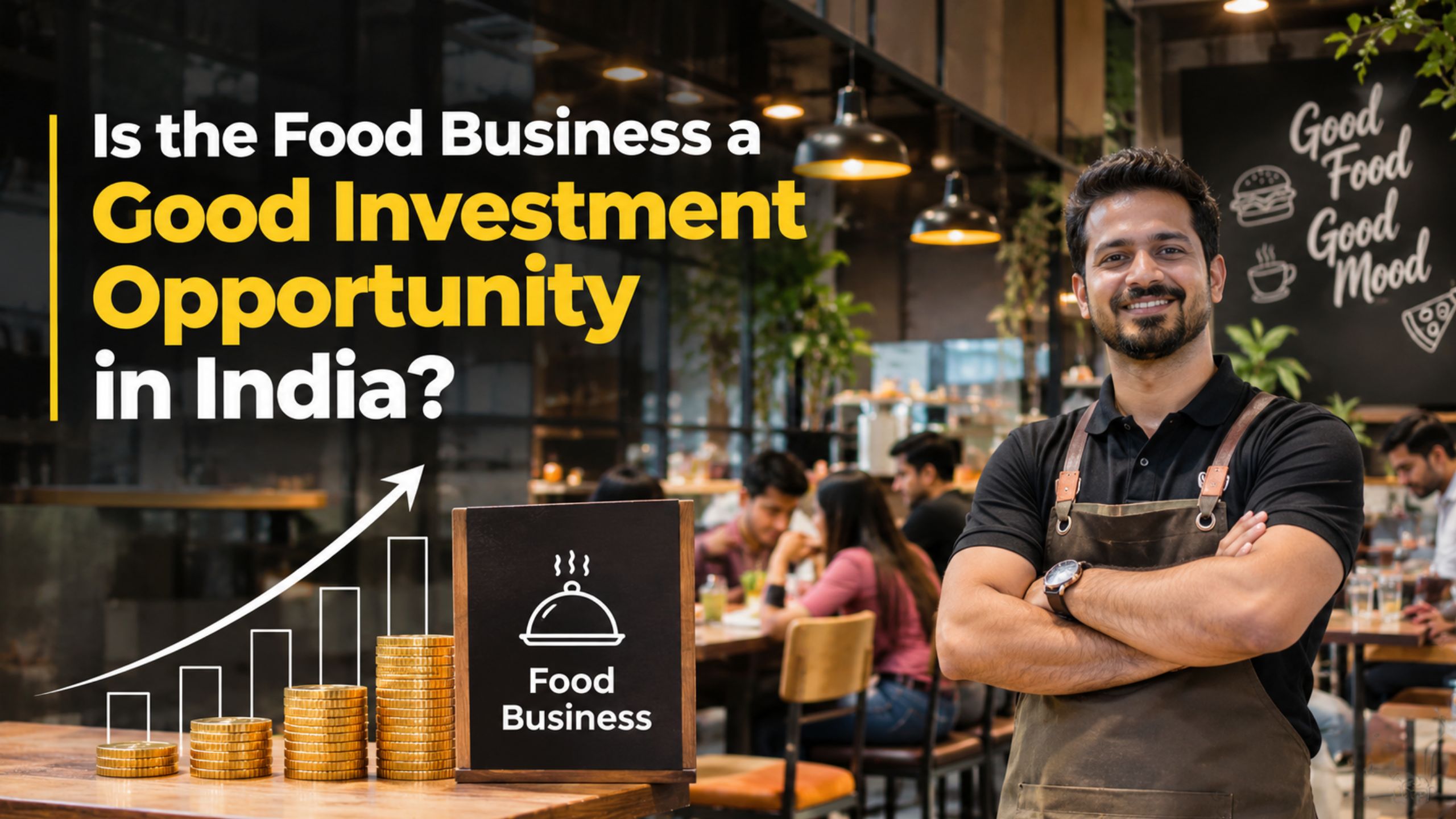
Is the Food Business a Good Investment Opportunity in India?
The food business investment in India attracts entrepreneurs because people buy food every day. From restaurants and cafes to cloud kitchens, tiffin services and packaged food brands, there are many ways to enter this industry. Changing lifestyles, online ordering and demand for convenient meals have also created new opportunities for small and large businesses.
However, regular demand does not automatically mean regular profit. A food outlet can receive orders every day and still lose money because of high rent, expensive ingredients, food wastage, staff costs or delivery charges. The real opportunity lies in choosing the right business model, understanding customers and managing daily expenses.
So, is food business profitable in India? It can be a good investment when the concept has local demand, the costs are planned properly and customers return regularly. This guide explains the available opportunities, investment requirements, profit calculations, risks and important checks to make before investing.
Understanding the Food Business in India
The food industry in India includes restaurants, cafes, fast-food outlets, cloud kitchens, catering services, bakeries, packaged food companies and many other businesses.
The market is also changing. Customers are ordering meals online, looking for convenient food options and trying different cuisines. Smaller cities are becoming important markets for organised food services, while local food preferences continue to influence what people buy.
An industry update published in July 2026 estimated India’s food-services market at around US90billioninFY26andprojectedittoreachUS150 billion by FY31. This indicates a growing market, but it should not be treated as a guarantee that every new outlet will succeed.
For an investor, the useful question is not simply how large the industry is. It is whether enough customers in a particular area will buy a particular product at a price that covers the business costs.
Why Is Food Business Investment Attractive?
There are several reasons entrepreneurs consider food businesses.
1. Regular Customer Demand
Food is a daily need. People buy breakfast, lunch, dinner, snacks and beverages for different reasons. A business that offers good quality, fair prices and reliable service can build repeat customers.
2. Different Ways to Start
You do not need to open a large restaurant to enter the industry. A small takeaway counter, home-based food service or delivery kitchen may offer a more manageable starting point.
3. Changing Customer Habits
Busy professionals, students and families often look for convenient meals. Online ordering, ready-to-eat products and subscription meal services have created opportunities for businesses that solve specific customer needs.
4. Regional and Speciality Food Demand
Local snacks, regional meals, healthy food, bakery products and speciality cuisines can help a business stand out. A focused product range may work better than trying to sell everything.
5. Scope to Build a Recognisable Brand
A successful outlet can build a customer base and later explore catering, packaged products, additional locations or franchise opportunities. Expansion should happen only after the original business model works consistently.
Profitable Food Business Ideas in India
The right business depends on your budget, experience, location and ability to manage daily operations. Compare these common models before deciding.
| Business model | Investment considerations | Space needs | Main cost drivers | Suitability for beginners |
|---|---|---|---|---|
| Small takeaway outlet | Compact setup and limited seating | Small shop or counter | Rent, equipment, ingredients | Good with a focused menu |
| Cloud kitchen | Kitchen setup without dine-in space | Commercial kitchen | Ingredients, staff, packaging, delivery charges | Suitable for delivery-focused operators |
| Restaurant | Higher setup and operating commitment | Kitchen and dining area | Rent, interiors, staff, utilities | Better with sufficient capital and experience |
| Cafe | Equipment and customer seating | Small to medium outlet | Rent, beverages, interiors, staff | Depends on location and customer demand |
| Food truck | Vehicle and cooking setup | Mobile format | Vehicle, equipment, fuel, permissions | Requires location and operating checks |
| Bakery | Production and display equipment | Kitchen and possible retail area | Ingredients, ovens, packaging, storage | Suitable for specialised products |
| Tiffin service | Smaller production setup | Home or commercial kitchen | Ingredients, delivery, packaging | Good for testing local demand |
| Catering | Equipment and transport planning | Kitchen and storage | Bulk ingredients, labour, logistics | Suitable for people with event networks |
| Packaged food | Production, packaging and distribution | Production or contract facility | Ingredients, packaging, testing, distribution | Needs product and supply-chain planning |
These models do not have fixed investment costs. A restaurant in a premium market may cost much more than a small outlet in a residential area. Your menu, property condition, equipment, staff and city will all change the final budget.
Is a Cloud Kitchen a Good Investment?
Cloud kitchen investment can be attractive when customers in the selected area regularly order food online. A cloud kitchen does not need a dining area, which may reduce interior and front-of-house expenses.
However, it still needs a suitable kitchen, equipment, staff, packaging, food-safety systems and marketing. Delivery-platform charges can also reduce the amount left from each order.
Explore cloud kitchen business models to understand how delivery-focused operations work. You can also review The Rolling Plate’s cloud kitchen business model before deciding whether this format suits your plan.
How Much Investment Is Required to Start a Food Business?
The food business startup cost depends on the size and type of operation. A home-based service may need a smaller initial setup, while a restaurant may require major spending on premises, interiors and equipment.
Prepare a budget covering these expenses:
| Investment area | Expenses to consider |
|---|---|
| Property | Rent, security deposit and brokerage |
| Interiors | Flooring, counters, seating and civil work |
| Kitchen setup | Cooking equipment, refrigeration, exhaust and utensils |
| Storage | Shelves, containers and cold storage |
| Registrations | Applicable licences and professional fees |
| Initial stock | Ingredients, beverages and cleaning materials |
| Packaging | Containers, bags, labels and seals |
| Employees | Recruitment, salaries, uniforms and training |
| Technology | Billing software, POS and inventory systems |
| Marketing | Branding, photography, promotions and online listings |
| Operations | Electricity, gas, water, maintenance and delivery |
| Working capital | Cash for regular expenses and unexpected delays |
Do not spend your entire budget on opening the outlet. Keep enough working capital to pay rent, salaries and suppliers while sales are still developing.
For a delivery-focused business, The Rolling Plate’s cloud kitchen setup cost guide can help you understand the main setup expenses.
Understanding Revenue, Profit and Cash Flow
One of the biggest mistakes new investors make is treating sales as profit. These figures have different meanings.
- Revenue: Total money earned from selling products or services.
- Gross profit: Revenue left after subtracting the direct cost of the food sold.
- Operating profit: Amount left after operating expenses such as rent, salaries, utilities and marketing.
- Net profit: Earnings remaining after applicable expenses, interest, taxes and other costs.
- Cash flow: Money actually coming into and going out of the business during a period.
A business may show profit on paper but still face a cash shortage if customers or platforms pay late, stock purchases are high or bills are due before sales money arrives.
Is Food Business Profitable in India? A Practical Calculation
Food business profit margin depends on the menu, selling price, ingredient cost, order volume, rent, staffing and delivery mix. There is no single margin that applies to every restaurant or cloud kitchen.
Consider this illustrative example of a small delivery-focused food outlet.
Assumptions:
- Average order value: ₹200
- Orders per day: 50
- Operating days: 30
- Monthly orders: 1,500
Monthly revenue = 1,500 × ₹200 = ₹3,00,000
| Monthly expense | Illustrative amount |
|---|---|
| Ingredients | ₹1,05,000 |
| Packaging | ₹15,000 |
| Delivery and platform charges | ₹30,000 |
| Rent | ₹25,000 |
| Staff salaries | ₹45,000 |
| Utilities | ₹8,000 |
| Marketing and other expenses | ₹12,000 |
| Total expenses | ₹2,40,000 |
Illustrative operating surplus = ₹3,00,000 − ₹2,40,000 = ₹60,000
This is an example, not an industry average or promised return. It excludes any costs not listed, such as depreciation, loan interest and applicable taxes.
What Happens When Sales Fall?
Suppose orders fall from 50 to 35 per day while the average order value remains ₹200.
Monthly revenue becomes ₹2,10,000. If some expenses remain fixed, the business may have very little left after paying its bills. This is why a business should not depend on its best sales days to survive.
Now imagine ingredient prices increase or packaging costs rise. Even if sales remain unchanged, the amount left for the owner becomes smaller.
How to Calculate Break-Even and ROI
Break-even is the sales level at which the business covers its costs.
For a simple calculation:
Break-even sales = Fixed costs ÷ Contribution margin ratio
If monthly fixed costs are ₹90,000 and 40% of sales remains after variable costs, break-even sales would be ₹2,25,000.
For food business ROI, compare the actual profit earned over a period with the total investment made. Do not calculate recovery time using revenue. Include setup expenses, additional working capital and any further money required to keep the business running.
What Decides Food Business Profitability?
A good food concept needs strong daily management. These factors can make a major difference:
- Location: Select an area where your target customers live, work or regularly travel.
- Menu pricing: Price dishes after calculating ingredients, packaging and operating costs.
- Food quality: Keep taste, portion size and presentation consistent.
- Repeat orders: Give customers a reason to buy again through reliable service and quality.
- Supplier management: Compare quality and prices, and keep backup suppliers.
- Inventory planning: Buy according to demand to reduce spoilage and unnecessary stock.
- Customer reviews: Track feedback and correct repeated problems.
- Delivery costs: Review platform charges, discounts and packaging expenses.
- Financial tracking: Record daily sales, purchases, wastage and expenses.
A useful practice is to review the performance of every menu item. A dish that sells often may still contribute little profit if its ingredient cost or preparation time is too high.
For more information, read The Rolling Plate’s guide to profit margins in a fast-food business.
Food Business Risks You Should Understand
The food business risks are real, even when demand is strong. Planning for them before opening can help protect your investment.
| Risk | How it affects the business | How to reduce it |
|---|---|---|
| Strong competition | Customers have many alternatives | Offer a clear reason to choose your food |
| High rent | Fixed costs remain even on slow days | Match rent to realistic sales potential |
| Rising ingredient prices | Reduces money left per order | Review supplier rates and menu costs |
| Food wastage | Unsold stock becomes a loss | Track inventory and prepare in batches |
| Inconsistent demand | Sales may change by day or season | Plan cash reserves and flexible staffing |
| Staff turnover | Affects speed and food quality | Train more than one person for key tasks |
| Delivery commissions | Reduces order contribution | Build direct orders and review platform costs |
| Weak differentiation | Customers may not remember the brand | Focus on a clear menu and customer experience |
| Poor cash flow | Bills become difficult to pay | Maintain cash-flow records and working capital |
| Compliance gaps | Can lead to penalties or disruption | Check applicable registrations and safety rules |
Do not assume that a busy opening month means the business will remain busy throughout the year. Track results over time and make decisions using actual numbers.
Legal Requirements for Starting a Food Business in India
Before opening, check the registrations and permissions that apply to your business model and location.
FSSAI registration or licence: Applicable food business operators must obtain the correct FSSAI registration or licence. From 1 April 2026, the revised turnover bands are registration up to ₹1.5 crore, State Licence above ₹1.5 crore up to ₹50 crore, and Central Licence above ₹50 crore. However, the nature of the activity and other eligibility rules can affect the required category. Check your business on the official FoSCoS portal.
GST: Registration depends on applicable turnover rules, the type of supply and relevant exceptions. Check your position with a tax professional rather than assuming every small outlet has the same requirement.
Local permissions: Municipal trade permissions, Shops and Establishments registration, fire-safety approvals and other local requirements may apply depending on the premises and activity.
Also maintain suitable hygiene, storage, cleaning and food-handling practices. A home kitchen, food truck, packaged-food unit and restaurant may have different compliance needs.
Should You Start Independently or Choose a Food Franchise?
Both options can work, but they suit different types of investors.
| Factor | Independent food business | Food franchise |
|---|---|---|
| Brand | You build your own identity | You use an existing brand |
| Menu | More freedom to create and change | May have menu restrictions |
| Initial fee | No franchise fee | Franchise fee may apply |
| Training | You arrange your own learning | Brand may provide training |
| Suppliers | You select your vendors | Approved suppliers may be required |
| Marketing | You manage your own promotions | Brand support may be available |
| Operations | You build the systems | Some systems may already exist |
A food franchise investment may offer a structured operating model, but it does not remove business risk. Check the initial fee, royalty, marketing charges, supply conditions, territory rights, renewal and exit terms.
Speak with existing franchise owners and ask about their actual operating experience. Read the agreement carefully before paying.
The Rolling Plate is one option to evaluate if you are interested in a cloud kitchen or food franchise model. You can explore its cloud kitchen franchise options and broader food business opportunities. Review the current investment details, support, responsibilities and agreement terms directly before deciding. Its about page provides additional information about the business.
Who Should Invest in a Food Business?
A food business may suit people who understand their customers, have enough funds to manage the setup and daily expenses, and are ready to supervise operations.
It may be suitable for:
- Entrepreneurs with a clear food concept and tested demand.
- Existing food sellers who want to expand.
- Professionals prepared to manage a business full-time or appoint reliable operators.
- Investors who understand the risks and have working capital available.
Think carefully if you are using all your savings, depending on immediate profits or planning to manage the business without understanding food operations.
Make Your Food Business Investment a Planned Decision
The food business investment in India can offer meaningful opportunities, but success depends on the business you choose and how well you manage it. Strong demand, a good location and an attractive menu are useful starting points. They must be supported by realistic pricing, controlled expenses, reliable suppliers, food safety and repeat customers.
Start with market research, calculate the full investment and keep enough working capital. Compare independent and franchise models carefully instead of choosing only by the advertised starting price.
If you are exploring a cloud kitchen or franchise route, The Rolling Plate can be included in your research. Review its available models and current terms, compare them with your business goals and ask questions before investing. To learn more about its food business and cloud kitchen franchise opportunities, Contact us and request the latest details.
Frequently Asked Questions
1. Is the food business a good investment opportunity in India?
It can be a good opportunity when there is local customer demand, the business has a clear identity and costs are managed carefully. However, food businesses face competition, operating expenses and changing demand, so profits are not guaranteed.
2. How much money is needed to start a food business in India?
The amount depends on the business model, city, property, menu and equipment. A home-based service or small takeaway outlet generally needs a different budget from a cafe or full-service restaurant. Calculate setup costs and working capital separately.
3. Which food business is best for a low budget?
A tiffin service, home-based food business, small takeaway counter or focused snack outlet may be worth exploring. Choose based on local demand, your skills and the cost of operating the business.
4. Is a cloud kitchen profitable in India?
A cloud kitchen can be profitable when it receives enough orders and controls ingredients, packaging, staff, rent and delivery charges. Lower spending on dining space does not automatically mean higher profit.
5. What is a good profit margin for a food business?
There is no single profit margin that applies to all food businesses. A restaurant, bakery, cloud kitchen and catering service have different cost structures. Calculate your own margins using actual sales and expenses.
6. How long does it take for a food business to break even?
It depends on the initial investment, monthly fixed costs, order volume and contribution per sale. Calculate the sales needed to cover expenses and track actual performance instead of relying on a fixed recovery promise.
7. Is investing in a food franchise better than starting independently?
A franchise may offer brand recognition, training and operating guidance, while an independent business gives you more control. Compare fees, royalties, restrictions, supplier terms and support before choosing.
8. What are the biggest risks of investing in a food business?
Common risks include high rent, competition, rising ingredient prices, food wastage, staff problems, weak cash flow, delivery charges and compliance gaps. A realistic budget and regular financial tracking can help reduce them.
9. How do I choose the right food business model?
Consider your budget, experience, target customers, location and preferred way of operating. Compare the costs and daily responsibilities of restaurants, cloud kitchens, cafes, takeaways, catering and other formats.
10. Can I start a food business while working a full-time job?
It may be possible if the business has reliable daily supervision and clear operating systems. However, food preparation, quality checks, staff management and customer complaints need regular attention. Plan who will manage these responsibilities before investing.

Enquire Now
Recent Post




Other Blogs
Discover our latest news
and updates now.
A Complete Checklist for Starting a Food Business in India
November 05, 2026
Which Food Businesses Are Most Profitable?
November 02, 2026
Low Cost Food Franchise in India for First-Time Business Owners
October 21, 2026
Cafe Franchise in India: Investment, Space, Fees & How to Start
October 19, 2026