
Cloud Kitchen License in India: Complete Guide to Legal Requirements
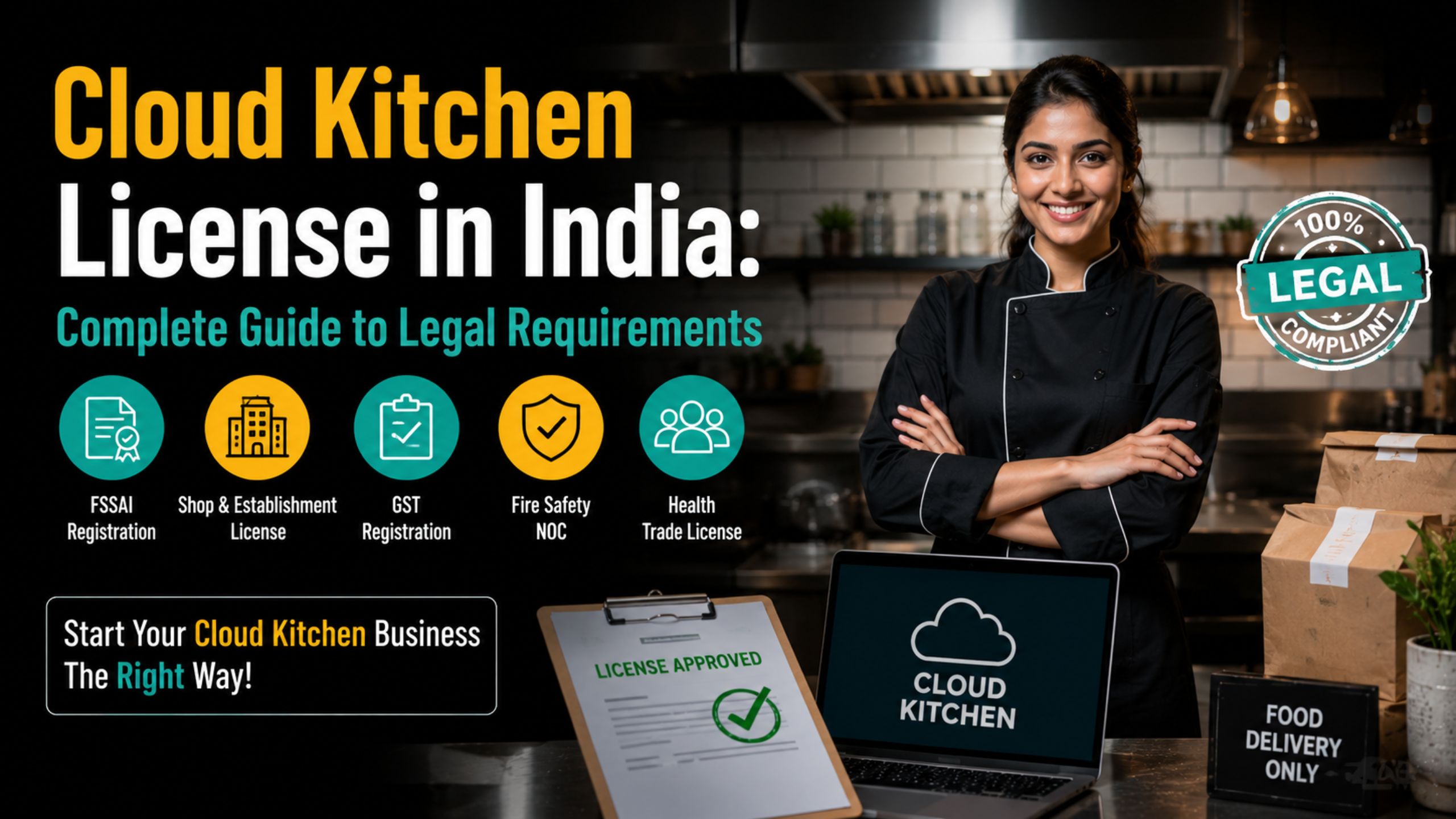
Cloud Kitchen License in India: Complete Guide to Legal Requirements
Starting a cloud kitchen in India without proper licenses is like driving without a license; you might get away with it for a while, but eventually, you’ll face serious problems. Many new food entrepreneurs jump into the business excited about cooking and serving customers, forgetting that legal compliance is just as important as having a great recipe.
The most common mistake? Thinking you can “figure out licenses later” after your business starts making money. This approach often leads to hefty fines, forced closures, and damaged reputation. When health inspectors or government officials knock on your door, not having proper cloud kitchen licenses can cost you thousands of rupees in penalties and months of business disruption.
Having the right licenses required for cloud kitchen operations isn’t just about following rules; it’s about building trust. Customers today are smart. They check if your business has a proper FSSAI license for a cloud kitchen before ordering. Food delivery platforms like Zomato and Swiggy won’t even list your kitchen without valid documents.
Legal compliance protects both you and your customers. It ensures food safety, fair business practices, and smooth operations. This guide will walk you through every cloud kitchen legal requirement step by step, in simple language anyone can understand.
Understanding Cloud Kitchen Business in India
A cloud kitchen, also called a ghost kitchen or dark kitchen, is a commercial kitchen that only prepares food for delivery. Unlike traditional restaurants, cloud kitchens have no dining area; they focus entirely on online orders through apps and websites.
The cloud kitchen startup India market has grown tremendously, especially after 2020. With lower setup costs than regular restaurants and increasing demand for food delivery, many entrepreneurs are choosing this business model.
Complete List of Licenses for Cloud Kitchen Business
Before diving into details, here’s a quick overview of all cloud kitchen permits you’ll need:
| License Type | Mandatory? | Approximate Cost | Validity Period |
| FSSAI License | Yes | ₹100-7,500 | 1-5 years |
| GST Registration | Yes (if turnover >₹20 lakhs) | Free | Lifetime |
| Trade License | Yes | ₹500-5,000 | 1 year |
| Shop & Establishment | Yes | ₹100-2,000 | 1-5 years |
| Fire Safety NOC | Sometimes | ₹1,000-10,000 | 1-3 years |
| Business Registration | Yes | ₹500-15,000 | Varies |
| Trademark | Optional | ₹4,500+ | 10 years |
Note: Fees vary by state and are subject to change.
1. FSSAI License: Your Most Important Document
What is an FSSAI License?
The FSSAI license for a cloud kitchen is issued by the Food Safety and Standards Authority of India. It’s like a passport for your food business; without it, you cannot legally operate.
Why is it Required?
This food business license ensures your kitchen maintains hygiene standards and serves safe food. It’s mandatory for anyone preparing and selling food commercially.
Types of FSSAI License
- Basic Registration: For businesses with annual turnover up to ₹12 lakhs
- State License: For turnover between ₹12 lakhs to ₹20 crores
- Central License: For turnover above ₹20 crores
Documents Required
- Identity proof (Aadhaar/PAN)
- Address proof of business premises
- Rental agreement or ownership documents
- Two passport-size photos
- Food safety management plan
- List of food products
- Equipment and machinery list
Application Process
- Visit fssai.gov.in or the FoSCoS portal
- Choose license type based on turnover
- Fill online application form
- Upload documents
- Pay fees online
- Wait for inspection (if required)
- Receive license within 30-60 days
Common Mistakes to Avoid
- Applying for the wrong license type
- Incomplete documentation
- Not displaying license number on packaging
- Forgetting to renew on time
2. GST Registration for Cloud Kitchen
When Do You Need GST?
GST registration for a cloud kitchen becomes mandatory when your annual turnover exceeds ₹20 lakhs (₹10 lakhs in special category states). However, if you sell through online platforms, you might need GST regardless of turnover.
Documents Required
- PAN card
- Aadhaar card
- Business address proof
- Bank account details
- Photographs
- Business registration certificate
Benefits of GST Registration
- Legal compliance
- Input tax credit benefits
- Business credibility
- Required by food delivery apps
Application Process
- Visit gst.gov.in
- Fill Form GST REG-01
- Upload documents
- Receive ARN (Application Reference Number)
- Get GSTIN within 7 working days
3. Trade License from Local Municipal Corporation
What is a Trade License?
A trade license is permission from your local municipal corporation to run a business in that area. Every cloud kitchen startup in India needs this basic permit.
Why is it Important?
This license ensures your business doesn’t disturb the neighbourhood and follows local regulations. Without it, authorities can shut down your kitchen.
How to Apply
- Visit the local municipal office or website
- Fill out the trade license application
- Submit required documents
- Pay fees (varies by location)
- Wait for inspection
- Receive license within 15-30 days
Documents Needed
- Property ownership/rental proof
- ID and address proof
- NOC from property owner
- Partnership deed (if applicable)
- Other licenses obtained
4. Shop and Establishment Act Registration
Understanding Shop & Establishment License
Shop and Establishment Act registration regulates working conditions, employee rights, and business hours. Every commercial establishment needs this registration within 30 days of starting operations.
Key Requirements
- Business name and address
- Employer and employee details
- Working hours
- Weekly holidays
- Leave policy
Application Process
Most states now offer online registration:
- Visit the state labour department website
- Create an employer account
- Fill in establishment details
- Upload documents
- Pay fees online
- Receive certificate
5. Fire Safety Certificate
When is Fire NOC Required?
A fire safety certificate is mandatory if your kitchen:
- Is located in a commercial building
- Uses commercial gas connections
- Has a seating area (even small)
- Is above a certain size (varies by state)
Getting Fire Safety Clearance
- Submit application to local fire department
- Fire officer inspects premises
- Install required safety equipment
- Get compliance certificate
- Receive Fire NOC
Safety Equipment Needed
- Fire extinguishers
- Smoke detectors
- Emergency exits
- First aid kit
- Fire blankets in kitchen
6. Business Structure Registration
Choosing the Right Business Structure
Before getting licenses required for a cloud kitchen, decide your business structure:
| Structure | Best For | Liability | Tax Benefits | Setup Cost |
| Sole Proprietorship | Single owners | Unlimited | Basic | Low |
| Partnership | 2+ partners | Unlimited | Moderate | Medium |
| LLP | Professional partners | Limited | Good | High |
| Private Limited | Growth-focused | Limited | Best | Highest |
Registration Process Varies by Type
- Sole Proprietorship: Simplest, needs just PAN and bank account
- Partnership: Requires a partnership deed and registration
- LLP/Private Limited: Register through the MCA portal
7. Platform-Specific Requirements
Zomato and Swiggy Requirements
To list on food delivery business platforms, you need:
- Valid FSSAI license
- GST registration (usually)
- Bank account in business name
- Menu with clear pricing
- High-quality food photos
- Packaging that maintains food quality
Platform Onboarding Process
- Apply on the platform partner website
- Submit all licenses
- Platform team visits kitchen
- Sign agreement
- Upload menu and photos
- Start receiving orders
Companies like The Rolling Plate can guide you through platform onboarding and help optimize your listing for maximum orders.
8. Additional Permits and Licenses
Pollution Control NOC
Required if your kitchen:
- Generates significant waste
- Uses coal or wood-fired ovens
- Is in a residential area
- Local rules mandate it
Trademark Registration
While optional, trademarking your cloud kitchen brand name protects your business identity. It prevents others from using your brand name and builds long-term value.
Music License
If you play music in your kitchen (even for staff), you might need licenses from:
- PPL (Phonographic Performance Limited)
- IPRS (Indian Performing Right Society)
State-Specific Variations
Cloud kitchen rules in India can vary significantly by state. For example:
- Delhi requires an additional health trade license
- Mumbai mandates an eating house license
- Bangalore has specific BBMP trade license requirements
- Chennai requires different corporation licenses
Always check with local authorities for area-specific requirements.
Documentation Checklist for Cloud Kitchen
Keep these cloud kitchen documents ready before starting applications:
Basic Documents
- PAN card
- Aadhaar card
- Passport photos
- Address proof (personal)
- Bank account details
Business Documents
- Rental agreement/property papers
- NOC from landlord
- Partnership deed (if applicable)
- Company registration (if applicable)
- Kitchen layout plan
Operational Documents
- Menu with prices
- Food safety plan
- Waste management plan
- Employee list
- Equipment list
Common Legal Mistakes That Delay Approvals
1. Starting Operations Before License Approval
Many entrepreneurs start cooking while licenses are “in process.” This is illegal and can lead to heavy penalties.
2. Using Residential Address Without NOC
Operating from home without proper permissions causes major legal issues.
3. Ignoring Renewal Dates
Most licenses need annual renewal. Missing renewal dates means starting the process again.
4. Incorrect Business Name Registration
Registering different names across licenses creates confusion and delays.
5. Incomplete Documentation
Submit all documents on the first attempt. Back-and-forth delays approval by months.
Timeline for Getting All Licenses
Here’s a realistic timeline for cloud kitchen registration in India:
| License | Processing Time |
| Business Registration | 7-15 days |
| FSSAI License | 30-60 days |
| GST Registration | 7 days |
| Trade License | 15-30 days |
| Shop & Establishment | 7-15 days |
| Fire NOC | 30-45 days |
Total Time: 2-3 months if done in parallel.
Cost Breakdown for Cloud Kitchen Licenses
Initial online food business registration costs:
- FSSAI License: ₹100-7,500
- GST Registration: Free
- Trade License: ₹500-5,000
- Shop & Establishment: ₹100-2,000
- Fire NOC: ₹1,000-10,000
- Business Registration: ₹500-15,000
- Total Estimate: ₹5,000-40,000
Costs vary by location and business size.
Best Practices for License Compliance
1. Start Early
Begin the food business registration process at least 3 months before planned launch.
2. Maintain Digital Copies
Keep scanned copies of all licenses in cloud storage.
3. Set Renewal Reminders
Create calendar alerts 2 months before each license expires.
4. Display Licenses
Show the FSSAI license number on all packaging and marketing materials.
5. Regular Compliance Audits
Review compliance quarterly to avoid surprises during inspections.
Professional consultants like The Rolling Plate can help streamline your licensing process and ensure you don’t miss any crucial requirements.
Your Cloud Kitchen Success Starts with Legal Compliance
Getting your cloud kitchen license in India might seem overwhelming, but it’s the foundation of a successful food business. Each license serves a purpose, protecting your business, your customers, and your future growth.
Remember, food business compliance isn’t a one-time activity. It’s an ongoing commitment to running a professional, trustworthy operation. When you have all your licenses in order, you can focus on what you do best: creating amazing food experiences for your customers.
Starting a cloud kitchen is exciting, but doing it right from day one saves you from headaches later. Whether you’re a home chef scaling up or an entrepreneur entering the food industry, proper licensing gives you the confidence to grow without legal worries.
Ready to turn your cloud kitchen dream into reality? The Rolling Plate specializes in helping food entrepreneurs navigate the complete setup process, from licenses to operations. Get expert support for your cloud kitchen from The Rolling Plate.
Frequently Asked Questions
1. Can I start a cloud kitchen from my home in India?
Yes, you can start a cloud kitchen from home, but you need proper licenses required for cloud kitchen operations, including FSSAI registration, and most importantly, an NOC from your housing society. Some states have restrictions on commercial activities in residential areas, so check local rules first.
2. What is the minimum investment required for cloud kitchen licenses?
The total cost for all cloud kitchen licenses typically ranges from ₹5,000 to ₹40,000, depending on your location and business structure. The FSSAI license for cloud kitchen alone costs between ₹100-7,500 based on your expected annual turnover.
3. How long does it take to get all cloud kitchen licenses in India?
Getting all cloud kitchen permits usually takes 2-3 months if you apply for multiple licenses in parallel. The FSSAI license takes the longest (30-60 days), while GST registration for a cloud kitchen is fastest (7 days).
4. Is GST registration mandatory for all cloud kitchens?
GST registration is mandatory if your annual turnover exceeds ₹20 lakhs. However, if you sell through online platforms like Zomato or Swiggy, they might require GST registration regardless of your turnover.
5. What happens if I operate without proper licenses?
Operating without proper cloud kitchen legal requirements can result in hefty fines ranging from ₹10,000 to ₹1 lakh, forced closure of business, legal proceedings, and blacklisting from food delivery platforms. It’s never worth the risk.
6. Do I need separate licenses for multiple cloud kitchen locations?
Yes, each cloud kitchen location needs its own set of licenses. Trade license and Shop and Establishment Act registration are location-specific. You might need separate FSSAI licenses too, depending on whether locations operate independently.
7. Can I use one FSSAI license for multiple food brands from the same kitchen?
Yes, you can operate multiple brands from one kitchen under a single FSSAI license for a cloud kitchen, but you must declare all brand names and food categories during registration. Each brand’s packaging must display the same FSSAI license number.
8. What documents do food delivery platforms require?
Zomato and Swiggy require a valid FSSAI license, GST registration (usually), PAN card, bank account details, address proof, and kitchen photographs. Some platforms have additional food delivery business license requirements based on location.
9. How often do I need to renew cloud kitchen licenses?
Most licenses required for cloud kitchens need annual renewal. FSSAI license validity ranges from 1-5 years, trade license needs yearly renewal, while GST registration is valid for lifetime unless cancelled.
10. Is trademark registration necessary for cloud kitchens?
Trademark registration isn’t mandatory but highly recommended for a cloud kitchen startup in India. It protects your brand name, prevents copycats, and adds value if you plan to franchise or sell your business later.

Enquire Now
Recent Post





Other Blogs
Discover our latest news
and updates now.
Cafe Franchise in India: Investment, Space, Fees & How to Start
October 19, 2026
KFC Franchise in India: Investment, Requirements & Franchise Process
October 04, 2026