

A Complete Checklist for Starting a Food Business in India
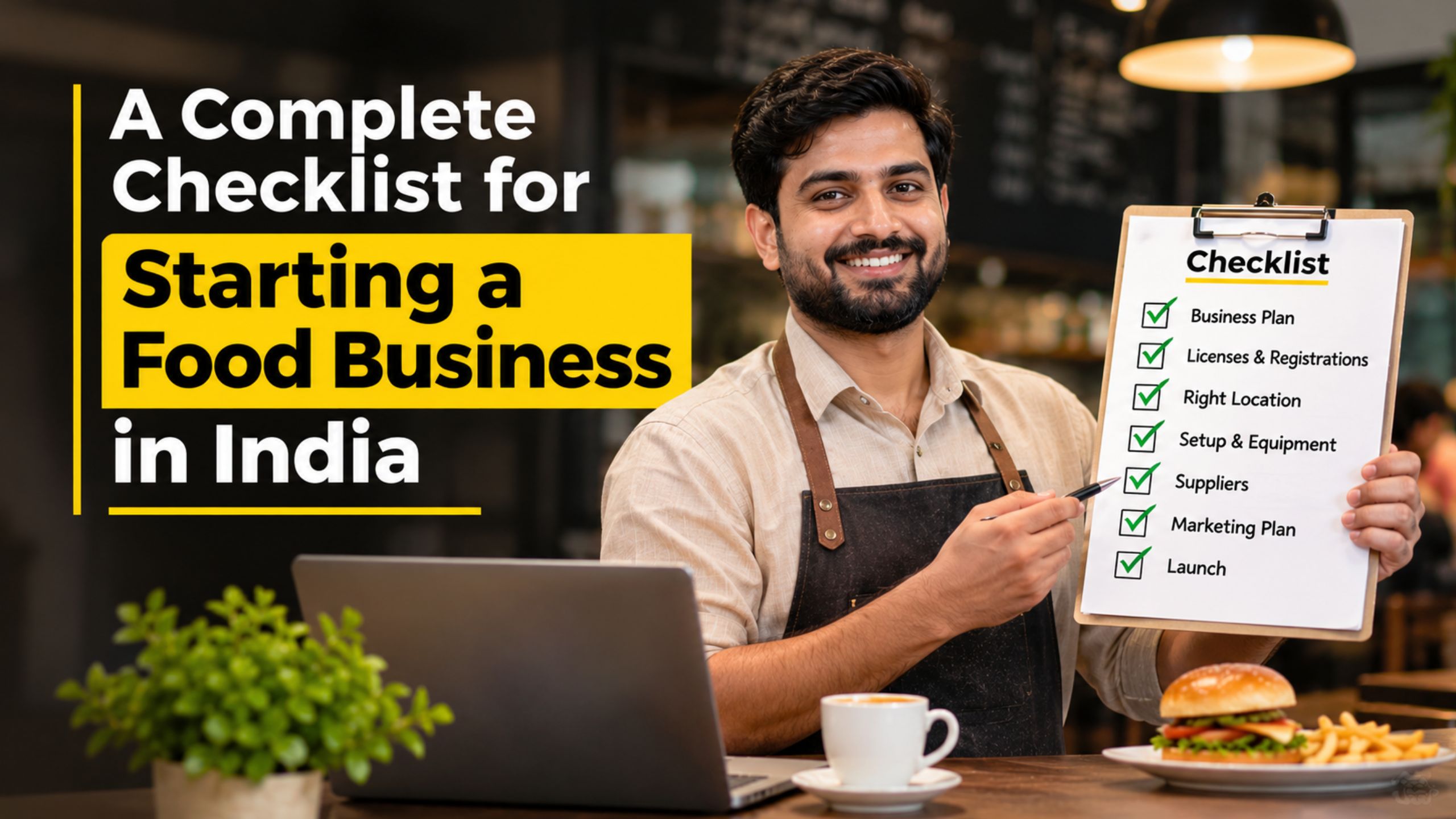
A Complete Checklist for Starting a Food Business in India
Starting a food business can be a good way to turn your cooking skills, food ideas or business plans into a source of income. But a successful food business needs more than tasty food. You must understand your customers, plan your investment, arrange the right kitchen, follow food safety rules and find ways to bring customers back.
Many new owners make the mistake of spending most of their money on interiors, equipment or rent before checking whether enough people will buy their food. Others open with a large menu, struggle to control food costs or miss important registrations. These problems can be reduced with proper planning.
This guide explains how to start a food business in India through practical steps, from choosing an idea to opening your outlet. It also covers costs, licences, suppliers, marketing and the checks you should complete before investing.
Quick Overview: What Do You Need Before Starting?
A food business needs a clear concept, a suitable business model, enough money for setup and daily expenses, a safe food preparation space, reliable suppliers and the right permissions.
Use this process as your first food business checklist:
- Choose a food concept and identify your customers.
- Research demand, competitors and selling prices.
- Select a restaurant, cafe, cloud kitchen or other model.
- Prepare a business plan and calculate the full investment.
- Finalise the location, menu, suppliers and equipment.
- Complete applicable registrations and permissions.
- Train staff and set up food safety and billing systems.
- Test operations, launch and track business performance.
Step 1: Choose a Food Business Idea That People Will Buy
The first step is choosing what you want to sell. Your idea should match your skills, budget and local demand. Do not select a business only because a food trend is popular on social media.
Some food business ideas in India include:
- Tea, coffee and snack counters
- Fast food outlets selling burgers, rolls and momos
- Restaurants and small cafes
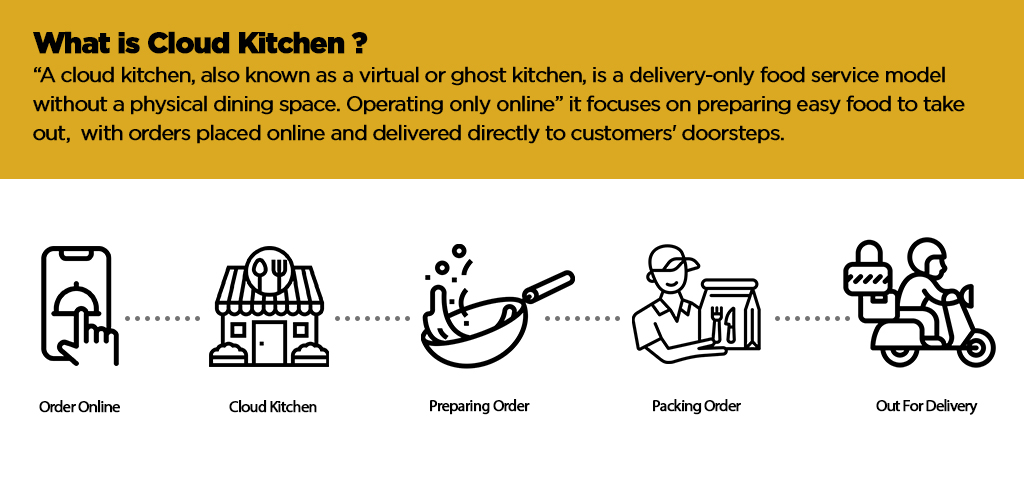
- Cloud kitchens and takeaway counters
- Home-based baking and meal services
- Tiffin and catering services
- Juice, dessert and ice cream outlets
- Regional food and speciality cuisine businesses
If you are starting with limited funds, consider small food business ideas that need fewer machines, a smaller menu and less space. A focused menu can also make it easier to manage stock and maintain food quality.
Before choosing, write down three things: what you can prepare or manage well, who is likely to buy it, and how much they may be willing to pay.
Step 2: Understand Your Customers and Local Demand
A good food idea can still fail if the right customers are not nearby. Identify whether you want to serve students, office workers, families, residents, travellers or online food customers.
Spend time observing the area where you plan to operate. Check nearby food outlets, their menu prices, busy hours, customer reviews and popular dishes. Speak with potential customers and ask what they find missing in the local market.
For example, an outlet near offices may get more lunch orders, while a location near a college may have demand for affordable snacks and quick meals.
For a delivery-focused model, study the areas you can serve within a reasonable delivery time. The Rolling Plate’s guides to cloud kitchen locations in Delhi, starting a cloud kitchen in Noida and cloud kitchen opportunities in Lucknow can help you understand how local markets differ.
Step 3: Select the Right Food Business Model
Your business model affects rent, staff, equipment, permissions and daily work. Compare the options before choosing a property or paying an advance.
| Business model | Space needs | Main requirements | Operational focus |
|---|---|---|---|
| Cloud kitchen | Small commercial kitchen | Cooking equipment, storage, packaging and delivery setup | Online orders and delivery |
| Restaurant | Kitchen plus dining area | Interiors, seating, service staff and kitchen | Dine-in service and food quality |
| Cafe | Small to medium outlet | Beverage equipment, counter and seating | Drinks, snacks and customer experience |
| Food truck | Vehicle-based setup | Food preparation equipment, vehicle and local permissions | Mobility and suitable vending locations |
| Takeaway outlet | Small shop or counter | Compact kitchen, display and packing area | Quick service and pickup |
| Home-based business | Suitable home kitchen | Food safety, storage and applicable permissions | Small batches and direct orders |
A home-based food business may be suitable for someone testing demand with a small menu, while a restaurant needs more money and daily supervision. A cloud kitchen removes the need for customer seating, but delivery costs and online competition still matter.
If you want to understand how to start a cloud kitchen, first study its kitchen needs, delivery area, packaging and order management. The Rolling Plate also explains different cloud kitchen business models.
Step 4: Prepare a Practical Business Plan
A food business plan should explain what you will sell, who will buy it, where you will operate and how the business will earn money.
Write down:
- Your business concept and target customers
- Menu and expected selling prices
- Setup budget and monthly expenses
- Supplier details and ingredient costs
- Staff requirements and daily responsibilities
- Marketing channels and sales targets
- Expected cash flow and emergency funds
Keep your first plan simple. Estimate sales using a realistic number of daily orders rather than assuming that the outlet will be busy from the first day. Review the plan if rent, supplier prices or customer demand changes.
Step 5: Calculate Investment and Working Capital
Your food business investment includes more than the cost of opening the kitchen. You also need enough money to pay bills and buy stock while sales are growing.
Use this food business startup cost checklist:
| Expense | What to budget for |
|---|---|
| Rent and security deposit | Advance payment and monthly rent |
| Interiors and civil work | Flooring, counters, plumbing and electrical work |
| Kitchen equipment | Cooking range, fryer, oven and preparation tools |
| Refrigeration and storage | Refrigerator, freezer, racks and containers |
| Exhaust and safety | Chimney, ventilation and fire-safety equipment |
| Utensils | Knives, pans, vessels and serving tools |
| Billing system | POS, printer, software and payment setup |
| Licences and registration | Applicable application and compliance costs |
| Initial raw materials | Ingredients, spices, oil and other stock |
| Packaging | Food containers, bags, labels and seals |
| Staff | Hiring, salaries, uniforms and training |
| Marketing | Signboards, photography, offers and online promotion |
| Utilities and delivery | Electricity, water, gas and delivery arrangements |
| Working capital | Money for regular expenses and unexpected delays |
Get quotations from more than one supplier. Do not buy every machine at the beginning. Prepare a list of essential equipment based on your menu, kitchen size and expected order volume.
The cloud kitchen setup cost guide gives additional context on the costs involved in a delivery-focused setup. Keep a separate emergency reserve instead of using your entire budget on opening day.
Step 6: Select the Location and Arrange Infrastructure
Your food business location selection should be based on customer access, rent, competition, delivery reach and the type of food you sell.
For a restaurant or cafe, check visibility, parking, water supply, drainage, electricity and customer movement. For a cloud kitchen, focus more on delivery coverage, road access, kitchen ventilation and the availability of commercial premises suitable for food preparation.
Before signing a lease, confirm that the property can be used for your intended activity. Check the building’s rules, power load, water supply, exhaust arrangements and permission requirements.
Your food business equipment list should follow your menu. A bakery needs different machines from a tea counter or a biryani kitchen. Plan separate areas for raw ingredients, preparation, cooking, packing, cleaning and waste storage.
Step 7: Plan the Menu, Pricing and Food Cost
A good menu should be easy to prepare, easy to understand and suitable for your customers. Avoid launching too many dishes at once. A smaller menu helps control stock, staff training, preparation time and wastage.
For effective food business menu planning:
- Start with a few main dishes and popular add-ons.
- Use ingredients across more than one dish where possible.
- Standardise portion sizes and recipes.
- Test how food tastes after travel if you offer delivery.
- Remove dishes that sell poorly or create high wastage.
Calculate the ingredient cost of every dish. Add packaging, expected wastage and other direct costs before deciding the selling price.
For example, if a meal sells for ₹200 and ingredients cost ₹70, packaging costs ₹15 and other direct order costs are ₹15, the amount left is ₹100 before rent, salaries, utilities, marketing and other overheads. This is not the final profit.
Read The Rolling Plate’s guide on calculating food cost per order to understand how to cost individual dishes.
Step 8: Find Reliable Suppliers and Choose Suitable Packaging
Your food business suppliers affect taste, quality, price and daily operations. Shortlist vendors for vegetables, dairy, meat, flour, spices, oil and packaging. Compare quality, delivery time, payment terms and return policies.
Do not depend on a single supplier for every important ingredient. Keep a backup option for items that can stop kitchen operations if they are unavailable.
Your food business packaging should protect the meal, prevent leakage and suit the food’s temperature and texture. Test containers before ordering in bulk. A dish that reaches customers soggy, cold or spilled can lead to poor reviews and repeat-order problems.
Step 9: Complete Food Business Registrations and Licences in India
The food business requirements depend on your business activity, location, size and legal structure. A sole proprietorship, partnership, LLP or company may suit different ownership arrangements. Choose the structure based on the number of owners, liability, tax and record-keeping needs.
FSSAI Registration or Licence
Applicable food business operators must obtain the correct FSSAI registration or licence before starting operations. Applications are handled through the official FoSCoS portal.
An important 2026 update changed the turnover bands from 1 April 2026:
- Registration: annual turnover up to ₹1.5 crore
- State Licence: above ₹1.5 crore and up to ₹50 crore
- Central Licence: above ₹50 crore
These are the revised turnover bands, but turnover alone may not decide the category for every activity. The kind of food business, scale, location and other eligibility conditions also matter. Check the exact activity in FoSCoS before applying. <Cite refs={[“turn542082search56″,”turn542082search2″,”turn542082search8”]}/>
Other Registrations and Permissions
Depending on your business and local rules, you may also need:
- GST registration, where applicable under current GST rules
- Municipal trade or health permissions
- Shops and Establishments registration, where applicable
- Fire safety approval based on the premises and activity
- Local permissions for food trucks or street vending
- Labour-related registrations and compliance, where applicable
Not every food business needs every approval. Check with the relevant local authority and a tax professional. Keep your identity proof, address proof, business constitution details, premises documents and activity information ready for applications. These are common records; the exact document list depends on the application type.
Step 10: Hire Staff and Set Up Daily Systems
Hire people according to the size and menu of your business. A small takeaway counter may need fewer staff than a restaurant with table service.
Train every team member on recipes, portion sizes, handwashing, safe food storage, cleaning and customer service. Write down opening and closing tasks so that important work is not missed.
Set up a billing system to record every sale. Maintain stock records for ingredients, packaging and finished products. Check daily purchases against usage to identify wastage, theft or incorrect portion sizes.
Step 11: Follow Food Hygiene and Safety Practices
Good food business hygiene requirements protect customers and help maintain trust. Keep raw and cooked food separate, store ingredients at suitable temperatures and follow safe cleaning practices.
Make sure your kitchen has:
- Clean water and handwashing facilities
- Covered bins and regular waste removal
- Pest-control measures
- Clean utensils and food-contact surfaces
- Proper storage labels and stock rotation
- Staff hygiene rules and clean uniforms
- A process for handling customer complaints
Use a daily cleaning record and check refrigerator temperatures as part of routine operations. Do not use ingredients beyond their safe condition or ignore signs of spoilage.
Step 12: Plan Marketing, Trial Operations and Launch
Your food business marketing should begin before the opening day. Create a clear business name, menu, contact details and online presence. Use local promotions, social media, maps listings and customer referrals where suitable.
If you plan to use delivery platforms, check their onboarding conditions, charges, menu rules and settlement process. Do not depend only on one app. Build direct customer relationships through repeat orders and responsible customer communication.
Before the full launch, run trial operations with a small group of customers. Test preparation time, portion sizes, packaging, billing, order accuracy and delivery handling. Fix problems before increasing order volume.
How to Calculate Food Business Profit and Break-Even
Food business profitability depends on sales and cost control. A simple monthly estimate should include:
- Sales revenue from food and beverages.
- Ingredient and packaging costs.
- Rent, salaries, utilities and marketing.
- Delivery, platform and payment charges.
- Repairs, wastage, loan payments and other expenses.
Illustrative example: Suppose a small outlet sells 40 meals per day at an average price of ₹150 for 30 days.
Monthly sales = 40 × ₹150 × 30 = ₹1,80,000.
If ingredients and packaging cost ₹65,000, and rent, staff, utilities and other monthly expenses total ₹90,000, the amount left is ₹25,000 before taxes, interest and any expenses not included in the example.
This is only a sample calculation, not an industry average or a profit promise. Your actual result will depend on sales, prices and costs. For a deeper look at cloud kitchen profit margins, review the costs that remain after each order is sold.
To calculate break-even sales, divide monthly fixed costs by the contribution margin ratio. If fixed costs are ₹60,000 and 40% of sales remains after variable costs, break-even sales are ₹1,50,000 per month. This tells you the sales level needed to cover the stated costs, not the amount you will earn.
Common Mistakes First-Time Food Entrepreneurs Should Avoid
| Common mistake | What to do instead |
|---|---|
| Spending all savings on setup | Keep working capital for slow months |
| Choosing a location without research | Observe customer demand and competition |
| Starting with a very large menu | Test a small menu first |
| Ignoring food wastage | Track stock, portions and expiry dates |
| Setting prices by copying competitors | Calculate your own recipe and operating costs |
| Depending only on delivery apps | Build direct customer relationships too |
| Buying unnecessary equipment | Purchase according to the menu and order plan |
| Opening without checking licences | Confirm applicable permissions before launch |
| Expecting immediate profit | Track cash flow and allow time to build demand |
Final Checks Before You Open Your Food Business
Use this food business launch checklist during the last week before opening:
- Business model, menu and target customers are clearly defined.
- Total setup cost and working capital are available.
- Premises and equipment are ready for safe operations.
- FSSAI registration or licence and other applicable permissions are in place.
- Suppliers, backup vendors and delivery arrangements are confirmed.
- Recipes, portion sizes and selling prices are tested.
- Packaging has passed food and delivery tests.
- Staff understand hygiene, preparation and billing procedures.
- Stock, sales and expense records are ready.
- Trial orders have been completed and problems corrected.
- A launch plan and emergency contact list are prepared.
Build Your Food Business on a Strong Foundation
Starting a food business in India becomes easier to manage when you make important decisions before spending money. Choose an idea that has real local demand, understand your customers, calculate the full investment and follow the rules that apply to your business. Keep your menu practical, maintain food safety and review sales and expenses regularly.
If you are considering a cloud kitchen or food franchise business, The Rolling Plate is one option you can explore alongside an independent setup. Review the available models, operating responsibilities and current terms before making a decision. A clear plan is more valuable than a promise of quick returns. If you need information about its food business models, Contact us and ask for the latest details before taking your next step.
Frequently Asked Questions
1. How do I start a food business in India?
Choose a food concept, research customers, select a business model, prepare a budget, arrange the kitchen, obtain applicable registrations and test your menu before launch.
2. What is the minimum investment needed to start a food business?
There is no fixed minimum. A home-based or small takeaway model may need less money than a restaurant. Your budget depends on equipment, rent, stock, permissions and working capital.
3. Which licence is required to start a food business in India?
Applicable food businesses need the correct FSSAI registration or licence. Other permissions, such as GST or local trade approval, depend on the activity and applicable rules.
4. How do I apply for FSSAI registration?
Check your business activity and eligibility on the FoSCoS portal, prepare the required documents, submit the application and follow the instructions shown for your category.
5. Which food business is best for beginners?
A focused takeaway counter, tiffin service, small cafe, home-based food business or cloud kitchen may suit beginners. Choose according to your skills, budget and local demand.
6. Can I start a food business from home?
A home-based food business may be possible, subject to applicable FSSAI requirements, local rules, housing restrictions and safe food preparation conditions. Check these before accepting orders.
7. How do I start a cloud kitchen in India?
Choose a delivery-friendly menu, study the delivery area, arrange a suitable kitchen, calculate equipment and packaging costs, obtain applicable permissions and test operations before listing online.
8. How do I select a location for a food business?
Study customer demand, nearby competition, rent, access, water, electricity and local permissions. For cloud kitchens, also check delivery reach and travel time.
9. How can I calculate food business profit?
Subtract ingredient, packaging, rent, salary, utility, delivery, marketing and other business expenses from sales. Track the figures every month to understand actual profitability.
10. What mistakes should I avoid when starting a food business?
Avoid spending all your money on setup, choosing a location without research, offering too many dishes, ignoring food costs, skipping applicable licences and expecting instant profits.

Enquire Now
Recent Post




Other Blogs
Discover our latest news
and updates now.
Is the Food Business a Good Investment Opportunity in India?
November 06, 2026
Which Food Businesses Are Most Profitable?
November 02, 2026
Low Cost Food Franchise in India for First-Time Business Owners
October 21, 2026
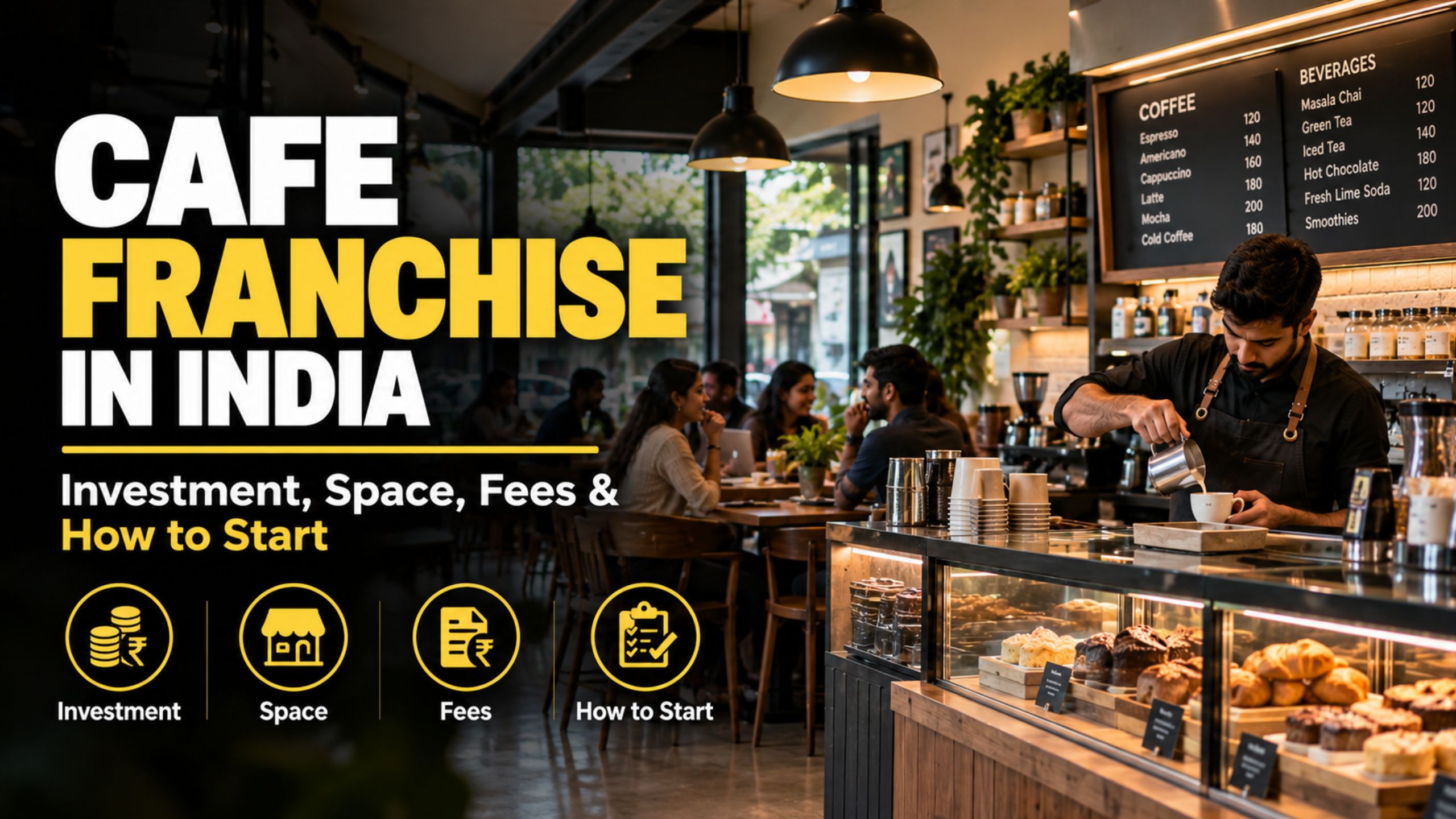
Cafe Franchise in India: Investment, Space, Fees & How to Start
October 19, 2026