

South Indian Food Franchise in India: Investment & Setup Requirements
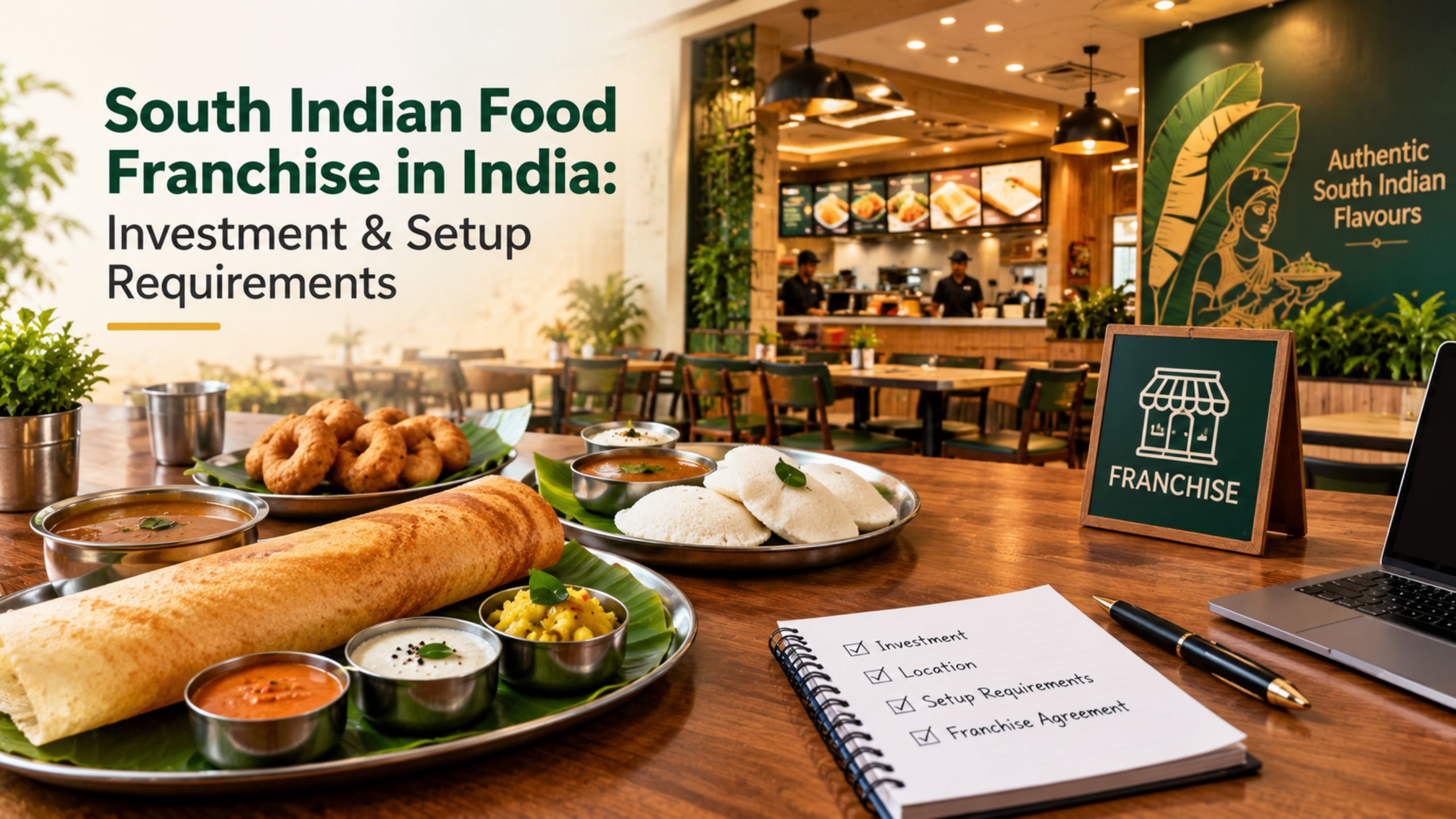
South Indian Food Franchise in India: Investment & Setup Requirements
South Indian food is no longer limited to the southern states. Idli, dosa, vada, uttapam, pongal and filter coffee are now common choices in cities across India. From office workers looking for a quick breakfast to families ordering dinner, the demand for simple, familiar and affordable South Indian meals can work across different customer groups.
This is why many entrepreneurs are considering a South Indian Food Franchise in India instead of starting a restaurant completely from scratch. Depending on the budget and target market, the business can be opened as a small kiosk, food-court counter, takeaway outlet, QSR, cloud kitchen or full dine-in restaurant.
There is no single South Indian food franchise cost that applies to every business. The total investment depends on the franchise brand, city, outlet format, rent, property size, interiors, kitchen equipment, staff, menu, licences and working capital.
So, before choosing a franchise, it is important to understand what you are actually paying for and which format fits your budget.
What Is a South Indian Food Franchise?
A South Indian food franchise is a business arrangement where you operate a South Indian food outlet using an established brand’s name, menu, recipes, systems and operating process.
Instead of building everything independently, the franchisor may provide support such as:
- Brand name and identity
- Standardised recipes
- Menu planning
- Staff training
- Kitchen and operational guidance
- Supplier support
- Marketing material
- Store design guidelines
- Technology or POS support
- Launch assistance
In an independent South Indian restaurant, you have complete control but also have to develop the brand, menu, recipes, supplier network and operating system yourself.
A franchise can reduce some of this work, but it also comes with franchise fees, ongoing charges, brand rules and contractual conditions. That is why you should compare the complete South Indian franchise investment, not just the advertised franchise fee.
South Indian Food Franchise Cost in India
The South Indian food franchise cost can vary significantly depending on the format.
A small kiosk will have very different expenses from a 1,000-square-foot dine-in restaurant. Similarly, a cloud kitchen does not need the same front-of-house investment as a restaurant.
| Format | Typical Space | Main Investment Areas | Setup Complexity |
| Kiosk | Small | Equipment, counter, branding, licences | Low |
| Food-court counter | Small to medium | Counter, kitchen equipment, deposit, branding | Low to medium |
| Takeaway/QSR | Medium | Kitchen, interiors, equipment, POS, staff | Medium |
| Cloud kitchen | Small to medium | Kitchen, equipment, licences, packaging | Medium |
| Small dine-in | Medium | Kitchen, interiors, furniture, equipment, staff | Medium to high |
| Large dine-in | Large | Full kitchen, interiors, furniture, staff, branding | High |
These are format comparisons, not fixed industry costs. Your actual South Indian restaurant setup cost may be higher or lower depending on the city, property and franchise agreement.
For example, a premium location with expensive rent can increase your initial deposit and monthly fixed expenses, while a delivery-focused kitchen may put more of the budget into kitchen operations and packaging.
South Indian Franchise Investment Breakdown
Your South Indian food franchise investment normally needs to be divided into two parts: one-time setup expenses and recurring operating expenses.
One-Time or Initial Expenses
These may include:
Franchise or brand fee: Some brands charge an upfront franchise fee. Others may use different commercial structures. Always confirm what the fee actually covers.
Property deposit and advance rent: Your landlord may require a security deposit and advance rent before you begin operations.
Interiors and civil work: This can include flooring, walls, electrical work, counter construction, lighting, plumbing and customer seating.
Kitchen setup: This is often one of the major expenses in a South Indian outlet.
Equipment: Dosa tawa, idli steamers, wet grinders, refrigerators, mixers, work tables and other commercial equipment are required depending on the menu.
POS and technology: You may need billing software, POS hardware, printers, internet setup and order management tools.
Licences and registrations: Food and business-related approvals depend on the location and business structure.
Branding: Signboards, menu boards, packaging design and other brand elements may be required.
Initial stock: Rice, dal, spices, oil, vegetables, coffee, packaging and other ingredients are needed before opening.
Launch marketing: Opening promotions, local advertising and online listings can also require a budget.
Recurring Monthly Expenses
Do not spend your complete budget on the opening setup.
You also need working capital for:
- Rent
- Staff salaries
- Ingredients
- Gas and electricity
- Packaging
- Delivery-related costs
- Marketing
- Maintenance
- Franchise royalty, where applicable
- Technology charges, where applicable
- Discounts and promotional offers
This is why South Indian food business investment should include a working-capital reserve rather than only the money required to open the outlet.
South Indian Kitchen Setup and Equipment
A well-planned kitchen can make preparation faster and help maintain consistency.
The exact South Indian kitchen setup cost depends on the menu, kitchen size, equipment quality and whether some preparation is done centrally.
| Equipment | Main Purpose | Cost Impact |
| Commercial dosa tawa | Preparing dosa and uttapam | Medium to high |
| Idli steamer | Steaming idli | Medium |
| Wet grinder | Batter preparation | Medium |
| Mixer/grinder | Chutneys, masala and other preparations | Low to medium |
| Refrigerator | Ingredient storage | Medium |
| Freezer | Frozen or longer-storage items | Medium |
| Stainless-steel work tables | Food preparation | Medium |
| Storage racks | Dry ingredient storage | Low to medium |
| Exhaust system | Smoke, heat and ventilation control | Medium to high |
| Cooking range | Sambar, curries and other cooking | Medium |
| Utensils | Daily food preparation | Low to medium |
| POS system | Billing and order management | Low to medium |
| Packaging area | Delivery and takeaway orders | Low |
A useful equipment plan should be based on your actual menu. There is no reason to buy every machine available if your outlet only sells idli, dosa, vada and beverages.
For a broader equipment reference, The Rolling Plate’s cloud kitchen equipment list with estimated cost can also help you understand how equipment requirements affect a food-business setup. The site also maintains related cloud-kitchen setup content.
South Indian Franchise Menu Planning
A South Indian menu can become very large if you try to include everything from the beginning.
Common items include:
- Idli
- Masala dosa
- Plain dosa
- Rava dosa
- Uttapam
- Vada
- Pongal
- Upma
- Poori
- South Indian meals
- Lemon rice
- Curd rice
- Sambar
- Coconut chutney
- Tomato chutney
- Filter coffee
- Tea and other beverages
The challenge is not creating a long menu. The challenge is running it efficiently.
Every additional dish can increase:
- Raw-material inventory
- Preparation time
- Equipment requirements
- Staff workload
- Storage requirements
- Food wastage
- Packaging needs
- Recipe complexity
For a new South Indian restaurant business, a focused menu is often easier to manage than a menu with dozens of low-selling items.
You can start with your strongest dishes and add new items after understanding customer demand.
Best Location for a South Indian Food Franchise
The right location depends on your outlet format.
A dine-in South Indian restaurant franchise may benefit from visibility, parking, walk-in traffic and nearby residential or commercial customers.
A kiosk may work better in a mall, food court, market or high-footfall commercial area.
A takeaway outlet can target offices, colleges, residential neighbourhoods and busy streets.
A cloud kitchen needs a different approach. Visibility is less important than delivery access, residential density, order potential and manageable rent.
The location should be evaluated for:
- Customer profile
- Residential population
- Office and IT hubs
- Colleges and universities
- Footfall
- Competition
- Rent
- Parking
- Accessibility
- Delivery radius
- Local food preferences
Before signing a property, compare expected sales with monthly rent instead of choosing a location only because it looks busy.
For a deeper location-planning approach, see The Rolling Plate’s guide to Best Cloud Kitchen Locations in India. It focuses on demand mapping, competition, delivery zones and the difference between restaurant locations and delivery-focused locations.
If you are planning a delivery-based business in the NCR region, you can also see this guide on starting a cloud kitchen in Noida.
South Indian Cloud Kitchen Franchise
A South Indian cloud kitchen franchise can be considered when the main focus is takeaway and online delivery rather than dine-in customers.
The biggest difference is the absence of a customer dining area.
| Factor | Cloud Kitchen | Dine-In Restaurant |
| Dining area | Not required | Required |
| Customer interaction | Mainly online | Online and in-store |
| Interiors | Basic operational setup | Customer-facing interiors |
| Staff | Kitchen and order team | Kitchen + service team |
| Packaging | Very important | Less important for dine-in |
| Delivery | Core sales channel | Additional sales channel |
| Location priority | Delivery demand | Footfall + demand |
| Major costs | Kitchen and operations | Kitchen, interiors and operations |
A cloud kitchen is not automatically cheaper or more profitable. You still need equipment, ingredients, staff, licences, packaging, marketing and working capital.
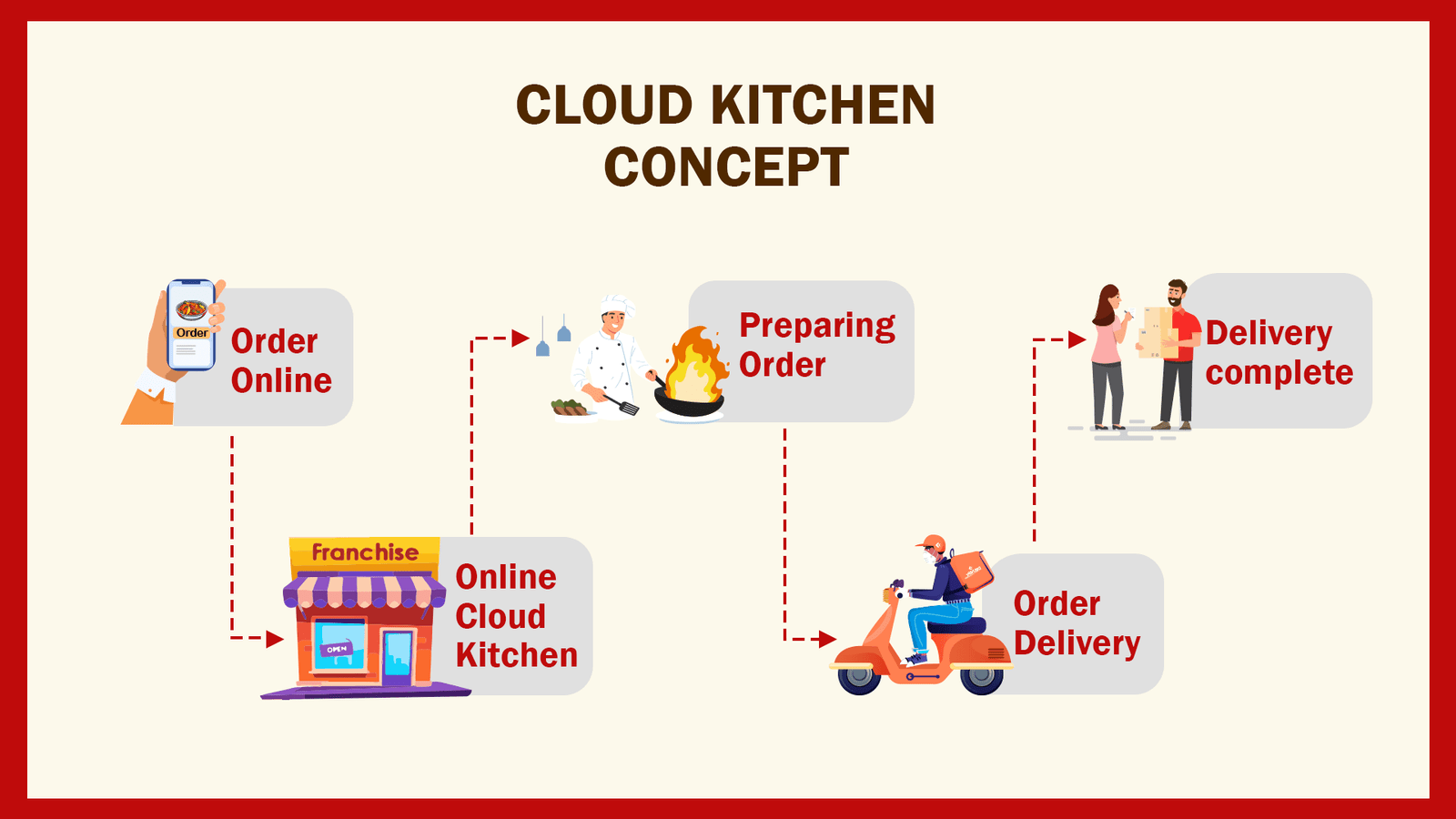
The Rolling Plate explains the basic cloud kitchen concept and how delivery-focused kitchens can operate without a traditional dining area.
For someone specifically considering Delhi, its Cloud Kitchen in Delhi page also covers the local delivery-focused model.
South Indian Franchise Models Compared
Before investing, decide how involved you want to be in daily operations.
| Model | Investment Level | Space | Staffing | Customer Experience | Main Cost Driver |
| Dine-in | Higher | Large | High | Full restaurant | Rent + interiors + staff |
| QSR/Takeaway | Medium | Medium | Medium | Quick service | Kitchen + rent |
| Kiosk | Lower | Small | Low to medium | Quick service | Equipment + location |
| Cloud kitchen | Varies | Small to medium | Kitchen-focused | Delivery/takeaway | Kitchen + delivery |
A South Indian QSR franchise can suit an entrepreneur who wants quick service and a focused menu, while a full restaurant requires more investment and operational management.
South Indian Food Franchise Profitability and ROI
Searching for South Indian franchise profit or South Indian food franchise ROI is natural, but there is no guaranteed profit number.
Your actual result depends on:
- Daily order volume
- Average order value
- Food cost
- Rent
- Staff salaries
- Packaging
- Electricity and gas
- Delivery commissions
- Marketing
- Discounts
- Wastage
- Franchise royalty
- Repeat customers
Here is a simple illustrative example, not an industry average.
Suppose a small outlet generates monthly sales of ₹6 lakh.
| Monthly Item | Illustrative Amount |
| Sales | ₹6,00,000 |
| Food ingredients | ₹1,80,000 |
| Packaging and direct costs | ₹30,000 |
| Staff | ₹90,000 |
| Rent | ₹60,000 |
| Utilities | ₹25,000 |
| Marketing | ₹20,000 |
| Delivery/platform-related costs | ₹45,000 |
| Other expenses | ₹20,000 |
| Amount remaining | ₹1,30,000 |
This remaining amount is only a simplified contribution toward business profit. Actual accounting may include taxes, depreciation, interest, franchise charges and other expenses.
The point is to understand the calculation rather than assume that sales equal profit.
For more practical food-business costing, you can read How to Calculate Food Cost Per Order for a Cloud Kitchen. It explains the difference between ingredient cost, packaging, direct cost and overall operating expenses.
You can also refer to Profit Margin in the Fast Food Business in India when comparing broader QSR economics.
South Indian Franchise Requirements
The exact South Indian food franchise requirements depend on the brand and outlet format.
Common requirements can include:
- Sufficient investment capacity
- Suitable commercial space
- Identity and address documents
- Business registration documents
- Applicable food registration
- GST registration where applicable
- Local permissions
- Staff recruitment
- Kitchen compliance
- Brand training
- Supplier compliance
- Ability to follow standard recipes and processes
A franchisor may also evaluate the proposed location before approving it.
Do not assume that one brand’s South Indian franchise requirements will apply to another. Always ask for the latest written requirements before signing a lease or paying a franchise fee.
How to Start a South Indian Food Franchise in India
If you are wondering how to start a South Indian food franchise, follow a practical sequence.
1. Choose Your Business Format
Decide whether you want a kiosk, QSR, takeaway outlet, cloud kitchen or dine-in restaurant.
2. Set a Realistic Budget
Calculate setup costs plus several months of working capital.
3. Research Franchise Brands
Compare menu, brand support, fees, royalty, supplier requirements and agreement terms.
4. Check the Location
Study customers, competitors, rent, delivery demand and accessibility.
5. Review the Franchise Agreement
Understand the agreement period, renewal, territory, fees, mandatory suppliers and exit conditions.
6. Finalise the Property
Only commit after the location has been checked against the franchisor’s requirements.
7. Complete Licences and Setup
Finish registrations, civil work, electrical work, kitchen installation and branding.
8. Recruit and Train Staff
Train cooks and other employees on recipes, hygiene, portions, service and order handling.
9. Finalise Suppliers
Make sure your ingredients are consistent in quality, price and availability.
10. Launch and Monitor
Track sales, food cost, wastage, customer reviews, repeat orders and daily expenses from the beginning.
If you want to understand a delivery-first setup more closely, The Rolling Plate’s Cloud Kitchens Business guide also covers market research, location, menu planning, setup and launch steps.
Questions to Ask Before Buying a South Indian Franchise
Never choose a franchise only because the brand shows an attractive investment or ROI claim.
Ask these questions before signing:
- What exactly is included in the franchise fee?
- Is there a separate renewal fee?
- Is there a monthly royalty?
- Is there a marketing fee?
- Are suppliers mandatory?
- Can I purchase ingredients locally?
- How are raw-material prices decided?
- Who pays for staff training?
- Is POS software mandatory?
- Are technology charges separate?
- How long is the franchise agreement?
- What are the renewal conditions?
- Do I get territory protection?
- What happens if I want to exit?
- How much working capital does the brand recommend?
- What support continues after launch?
A clear answer to these questions can tell you much more about the real South Indian restaurant investment than an attractive headline price.
Common Mistakes When Starting a South Indian Food Franchise
First-time entrepreneurs often focus heavily on the brand and forget the daily numbers.
Choosing a Location Only for Footfall
High footfall does not guarantee high sales. The customer profile and buying behaviour matter more.
Spending Too Much on Interiors
A clean, functional outlet is important, but excessive decoration can consume money that you need for working capital.
Buying Unnecessary Equipment
Your equipment list should match your menu and expected production volume.
Keeping Too Many Menu Items
A large menu can increase inventory, preparation time and wastage.
Ignoring Packaging
For takeaway and delivery, poor packaging can damage food quality and customer experience.
Underestimating Working Capital
Even a well-planned South Indian food franchise setup needs money to operate while sales are building.
Trusting Guaranteed Profit Claims
No franchisor can remove every business risk. Check actual costs and build your own financial calculation.
Choose the Right South Indian Food Business Model
The best South Indian Food Franchise in India is not necessarily the one with the lowest advertised investment or the biggest brand name. It should fit your budget, location, customer group and ability to manage daily operations.
A kiosk may work for a high-footfall food court. A QSR can suit office and residential markets. A dine-in restaurant can offer a broader customer experience, while a South Indian cloud kitchen franchise may suit a delivery-focused business plan.
The Rolling Plate is another option to consider when comparing broader South Indian food business ideas, especially if you are interested in cloud kitchen, multi-brand or delivery-focused food models. Its franchise platform includes different food categories and operating models rather than being limited to one cuisine.
Before investing, compare the complete setup cost, monthly expenses, menu economics, location potential and franchise agreement. If you want to discuss a suitable food franchise or cloud kitchen model, you can Contact The Rolling Plate and discuss your business plan with the team.
Frequently Asked Questions
1. How much does a South Indian food franchise cost in India?
The South Indian food franchise cost depends on the brand, format, city, property, equipment and working capital. A kiosk and a full dine-in restaurant can have very different investment requirements.
2. Is a South Indian food franchise profitable?
A South Indian food franchise can be profitable when sales, food costs, rent, staff expenses and other operating costs are managed well. However, profit is not guaranteed.
3. How much investment is required for an idli dosa franchise?
The idli dosa franchise cost depends on the franchise brand and format. A small kiosk, takeaway outlet and dine-in restaurant will require different levels of investment.
4. What space is required for a South Indian restaurant?
Space depends on the format. A kiosk needs much less space than a dine-in restaurant. A cloud kitchen also needs less customer-facing space because there is no dining area.
5. What equipment is needed for a South Indian food franchise?
Common South Indian restaurant equipment includes a dosa tawa, idli steamer, wet grinder, mixer, refrigerator, cooking range, stainless-steel work tables, storage racks, exhaust system and POS equipment.
6. Can I start a South Indian food business with a small investment?
Yes, a smaller South Indian food business can be started through formats such as kiosks, takeaway counters or cloud kitchens, depending on the brand and local requirements.
7. Is a South Indian cloud kitchen profitable?
A South Indian cloud kitchen can work when there is strong local delivery demand and the menu, pricing, packaging and operating costs are controlled. Profitability depends on the actual business numbers.
8. What are the requirements for starting a South Indian franchise?
Common South Indian franchise requirements include investment capacity, suitable premises, business documents, applicable food registrations, staff and compliance with the franchisor’s operating standards.
9. Which location is best for a South Indian food franchise?
The best location depends on the format. Residential areas, office hubs, colleges, markets and food courts can work for different models. A cloud kitchen should focus more on delivery demand than walk-in footfall.
10. What are the monthly expenses of a South Indian restaurant?
Monthly expenses can include rent, salaries, ingredients, electricity, gas, packaging, marketing, delivery costs, maintenance, royalty and other business expenses. The exact amount depends on the outlet size and location.

Enquire Now
Recent Post


Other Blogs
Discover our latest news
and updates now.
KFC Franchise in India: Investment, Requirements & Franchise Process
October 04, 2026
How to Make Money in the Food Industry
September 12, 2026
रेस्टोरेंट में टैक्स कैसे बचाएं? जानें 7 आसान तरीके
September 12, 2026