

Best Cloud Kitchen Locations in India for Maximum Profit
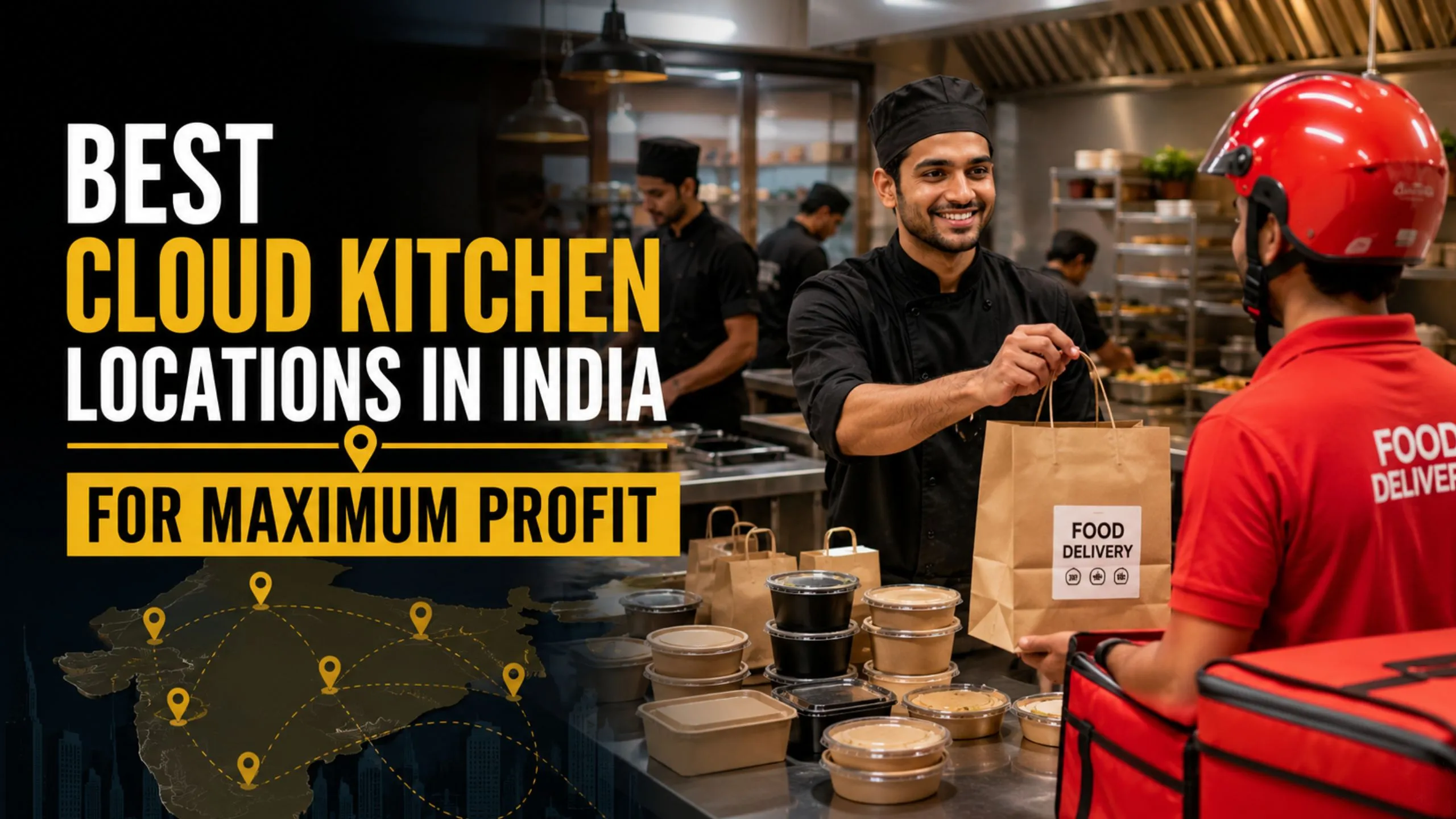
Best Cloud Kitchen Locations in India for Maximum Profit
When a Mumbai-based engineer quit his job to start a cloud kitchen in 2022, he made one critical mistake that cost him ₹15 lakhs in just six months. He set up his kitchen in a fancy commercial area with low residential density, thinking a premium location meant premium orders. Within months, high rent ate up his profits while orders trickled in slowly. His competitor, operating from a crowded residential lane just 2 kilometres away, was doing 300 orders daily at half the rent. This real-life example shows why choosing the right cloud kitchen locations in India can literally make or break your food delivery business.
Your location isn’t just an address; it’s your lifeline to customers, your ticket to profitability, and your biggest competitive advantage in the food delivery game. Whether you’re serving biryani or burgers, the difference between earning ₹2 lakhs monthly profit versus struggling to pay rent often comes down to those few critical kilometres. In India’s booming food delivery market, where Zomato and Swiggy process millions of orders daily, your kitchen’s location determines everything from delivery times to customer ratings, order volumes to operational costs. Get it right, and you could be looking at 40-50% profit margins. Get it wrong, and even the best chef with the tastiest menu might shut shop within a year.
Why Location Matters More Than Your Menu in Cloud Kitchen Business
The 3-Kilometer Rule That Changes Everything
In the food delivery business, there’s an unspoken rule: 80% of your orders will come from within a 3-kilometre radius. This isn’t just a random statistic – it’s the foundation of profitable food delivery business locations. When your kitchen sits in the sweet spot of high order density locations India, you’re not just close to customers; you’re close to profits.
Think about it simply: if you deliver food in 15 minutes versus 45 minutes, which customer is happier? Which one orders again? Food delivery apps like Zomato and Swiggy actively promote restaurants that deliver faster, giving you more visibility and orders. Your location directly impacts your ranking on these platforms, and better ranking means more orders – it’s that straightforward.
How Location Impacts Your Bottom Line
Profitable cloud kitchen areas share common characteristics that directly boost your profits:
- Lower delivery costs: Shorter distances mean lower fuel costs and faster turnaround for delivery partners
- Higher order frequency: Customers within 2-3 km order 3x more often than those 5+ km away
- Better ratings: Faster delivery equals hotter food and happier customers
- Reduced cancellations: Nobody cancels a 20-minute delivery; many cancel 60-minute ones
- Delivery partner availability: Popular areas have more riders, ensuring consistent service
Breaking Down India’s Top Cloud Kitchen Cities
Tier 1 Cities: The Big League Players
Best cities for cloud kitchen operations in India start with the metros, but success here requires smart micro-location choices:
Mumbai: The financial capital offers massive order volumes but comes with India’s highest rents. Areas like Andheri, Powai, and Lower Parel see 500+ daily orders per square kilometre. However, cloud kitchen setup cost in metro cities like Mumbai can reach ₹25-30 lakhs, including deposits.
Bangalore: IT corridor areas like Whitefield, Electronic City, and Koramangala are goldmines for cloud kitchens. Young techies order 4-5 times weekly, creating consistent demand patterns.
Delhi NCR: Gurgaon’s Cyber City, Noida’s sectors, and South Delhi’s residential pockets offer excellent order density. The region’s food culture supports diverse cuisines.
Hyderabad: HITEC City, Gachibowli, and Kondapur areas show remarkable growth in food delivery orders, with relatively lower setup costs than Mumbai or Bangalore.
Tier 1 vs Tier 2 Cities: The Profit Comparison
| Factor | Tier 1 Cities | Tier 2 Cities |
| Average Monthly Rent | ₹50,000-₹1,50,000 | ₹15,000-₹40,000 |
| Daily Order Potential | 200-500 orders | 100-250 orders |
| Average Order Value | ₹350-450 | ₹250-350 |
| Competition Level | Very High (50+ kitchens per area) | Moderate (10-20 kitchens) |
| Profit Margin Potential | 25-35% | 35-45% |
| Break-even Timeline | 6-8 months | 4-6 months |
Emerging Tier 2 Cities Worth Considering
Tier 1 tier 2 cities for cloud kitchen success aren’t just about metros anymore. Cities like Pune, Ahmedabad, Jaipur, and Chandigarh offer surprising advantages:
- 60% lower rental costs than metros
- Growing middle-class population ordering regularly
- Less saturated markets with room for new concepts
- Local food preferences creating niche opportunities
- Faster licensing and approval processes
Micro-Location Strategy: Where Exactly Should You Set Up?
IT Hubs and Corporate Zones
Zomato Swiggy demand areas consistently show the highest order volumes near IT parks and corporate offices. These locations guarantee:
- Bulk lunch orders (11 AM – 2 PM rush)
- Evening snack demand (4 PM – 6 PM)
- Late-night orders from working professionals
- Higher average ticket sizes
- Corporate catering opportunities
Residential Hotspots
Dense residential areas with 5,000+ families within a 3 km radius create steady order flow throughout the day. Look for:
- Apartment complexes with young families
- Areas with working couples
- Societies with 500+ flats
- Locations near schools (breakfast and lunch orders)
Student Areas: The Hidden Goldmine
Locations near colleges and coaching centers often get overlooked but offer:
- Consistent late-night orders
- Group orders for parties
- Budget-friendly menu acceptance
- High order frequency (students order 6-7 times weekly)
- Lower quality expectations, higher profit margins
Practical Location Selection Framework
Step 1: Demand Mapping Exercise
Before signing any rental agreement, spend one week analyzing:
- Open food delivery apps at different times
- Count active restaurants in your target area
- Check delivery times from existing kitchens
- Note which cuisines are missing
- Calculate average delivery fees charged
Step 2: Competition Analysis
Understanding your competition helps identify gaps:
- List all cloud kitchens within 3 km
- Note their cuisines and price points
- Check their ratings and reviews
- Identify what customers complain about
- Find the underserved segments
Step 3: Delivery Radius Planning
Your effective delivery radius determines your customer base:
- Map a 2 km radius (your primary zone)
- Identify 3-4 km areas (secondary zone)
- Calculate population density in each zone
- Estimate order potential based on demographics
- Plan menu pricing considering delivery costs
Step 4: Cost-Benefit Analysis
Cloud kitchen setup cost in metro cities varies dramatically by location:
- Calculate total monthly fixed costs (rent + salaries)
- Estimate daily orders needed to break even
- Factor in seasonal variations
- Include delivery partner commissions
- Plan for a 6-month runway capital
Common Location Mistakes to Avoid
The Premium Location Trap
Many beginners choose expensive main roads thinking visibility matters. Remember: cloud kitchens need accessibility, not visibility. A lane behind the main road often works better at 1/3rd the cost.
Ignoring Delivery Partner Access
If delivery partners struggle to find your kitchen or face parking issues, they’ll avoid picking orders. This directly impacts your delivery times and customer satisfaction.
Following Restaurant Logic
Traditional restaurants need footfall; cloud kitchens need order density. These are completely different games requiring different strategies.
Overlooking Infrastructure
Power cuts, water shortage, or poor internet can kill your operations. Check these basics before getting swayed by low rent.
Advanced Tips for Location Optimization
Rent Negotiation Strategies
- Start negotiations at 60% of asking price
- Offer longer lock-in periods for better rates
- Negotiate rent-free periods for setup
- Include escalation clauses capping annual increases
- Consider revenue-sharing models in premium locations
Multi-Kitchen Opportunities
Some locations support multiple brands from one kitchen:
- Areas with diverse food preferences
- Locations showing demand for multiple cuisines
- Zones with both office and residential mix
- Places with varying day/night demand patterns
Seasonal Demand Patterns
Understanding local patterns helps in planning:
- Festival seasons in residential areas
- Exam times near student zones
- Monsoon impacts on delivery times
- Summer vacation effects in family areas
Conclusion
The difference between a thriving cloud kitchen and a struggling one often comes down to those crucial location decisions made in the beginning. While recipes can be perfected and menus can be adjusted, changing your location means starting from scratch. That’s why smart entrepreneurs spend weeks researching cloud kitchen locations in India before investing their first rupee.
The food delivery revolution in India is just getting started, with tier 2 and tier 3 cities showing remarkable growth potential. Whether you choose bustling Zomato Swiggy demand areas in metros or emerging locations in smaller cities, success lies in matching your concept with the right neighbourhood. The Rolling Plate has helped numerous food entrepreneurs navigate these critical decisions, turning location challenges into profit opportunities. The right spot isn’t just about today’s orders; it’s about building a sustainable business that grows with India’s evolving food delivery ecosystem.
Ready to find your perfect cloud kitchen location? The journey from idea to successful food business starts with that one right decision. Contact us for more guidance or support in making your cloud kitchen dreams a reality.
FAQs
1. Which city is best for starting a cloud kitchen in India?
Bangalore, Mumbai, and Delhi NCR remain the best cities for cloud kitchen operations due to high order volumes and established delivery infrastructure. However, emerging cities like Pune and Ahmedabad offer better profit margins due to lower operational costs and growing demand.
2. What is the average cost to set up a cloud kitchen in metro cities?
Cloud kitchen setup cost in metro cities typically ranges from ₹10-25 lakhs, including kitchen equipment, licenses, deposits, and 3-month working capital. Tier 2 cities can reduce this by 40-50% while maintaining good profitability.
3. How do I identify high-demand areas for food delivery?
Check Zomato Swiggy demand areas by analyzing active restaurants, delivery times, and order volumes during peak hours. Areas showing 20+ active restaurants with 30-minute delivery times indicate high demand density.
4. Is it better to start in residential or commercial areas?
High order density locations in India typically combine both residential and commercial elements. Pure residential areas provide consistent dinner orders, while commercial zones excel during lunch hours. Mixed zones offer all-day demand.
5. What is the ideal rent for a profitable cloud kitchen?
Rent should not exceed 15-20% of your projected monthly revenue. In profitable cloud kitchen areas, this typically means ₹30,000-50,000 monthly rent for kitchens targeting ₹3-4 lakh monthly revenue.
6. How important is parking space for cloud kitchens?
Extremely critical. Delivery partners need quick access for pickups. Locations without adequate two-wheeler parking see 25% longer delivery times, directly impacting customer satisfaction and repeat orders.
7. Can cloud kitchens succeed in tier 3 cities?
Yes, tier 1 and tier 2 cities for cloud kitchen success now extend to tier 3 cities like Coimbatore, Visakhapatnam, and Nagpur. Lower competition and operational costs often result in faster profitability despite lower order volumes.
8. What delivery radius should I plan for?
The optimal delivery radius is 3-4 kilometres, covering 80% of potential orders. Beyond 5 kilometres, delivery costs increase significantly while order frequency drops, making operations unprofitable.
9. How do I analyze competition in my chosen location?
Study existing food delivery business locations within a 3 km radius, analyze their menus, pricing, ratings, and delivery times. The Rolling Plate recommends identifying 3-5 direct competitors and finding gaps in their offerings.
10. Should I consider locations near colleges and universities?
Student areas represent excellent cloud kitchen locations in India due to high order frequency, group orders, and acceptance of budget-friendly options. These zones typically show 40% higher order density during academic sessions.

Enquire Now
Recent Post




Other Blogs
Discover our latest news
and updates now.
KFC Franchise in India: Investment, Requirements & Franchise Process
October 04, 2026
How to Make Money in the Food Industry
September 12, 2026