
Cafe Franchise in India: Investment, Space, Fees & How to Start
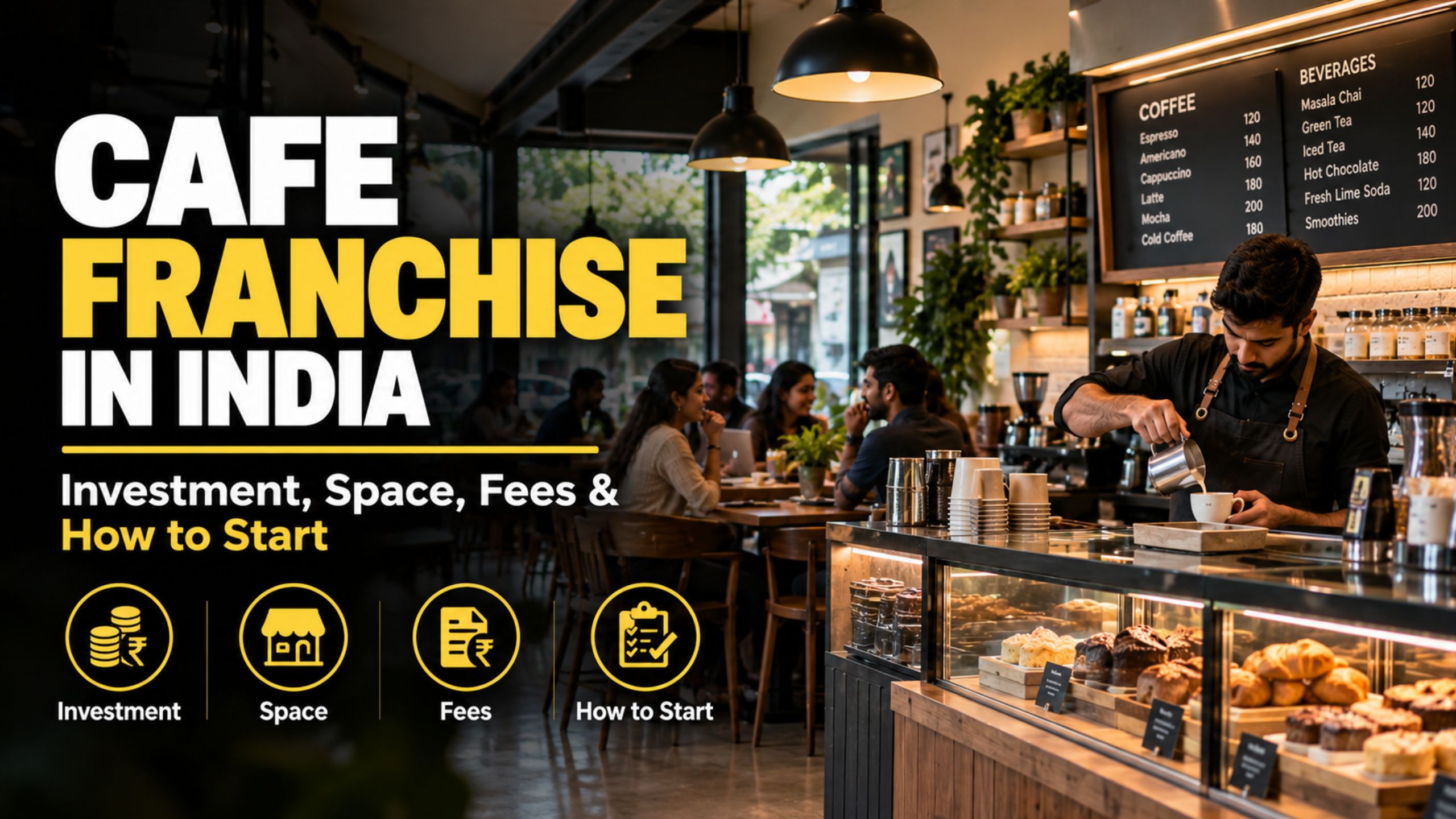
Cafe Franchise in India: Investment, Space, Fees & How to Start
Starting a cafe can be a good business opportunity for entrepreneurs who enjoy food, beverages and customer service. However, success depends on more than choosing a popular brand. You need to understand the complete investment, monthly expenses, location requirements and sales needed to run the business.
The Cafe Franchise in India market includes coffee shops, tea cafes, takeaway counters, bakery cafes and full-service outlets. The cost depends on the brand, city, shop size, franchise fee, equipment, interiors, rent, staff and working capital.
If you are researching a cafe franchise cost in India, do not judge an opportunity by its advertised starting price alone. Check what that amount includes and how much money you will need after opening.
What Is a Cafe Franchise?
A cafe franchise allows you to operate a cafe using an established brand name and business system under an agreement. Depending on the brand, support may include menu planning, staff training, equipment guidance, supplier connections and marketing.
An independent cafe gives you more control over pricing, menu and branding. A franchise may offer an existing business system, but it can also involve fees, operating rules and mandatory purchases.
Your cafe business investment should account for both the initial setup and the money required to keep the cafe running.
| Factor | Cafe franchise | Independent cafe |
| Branding | Uses an established brand | You build your own identity |
| Menu | Usually follows brand rules | You decide the menu |
| Support | May include training and marketing | You arrange support yourself |
| Fees | May include royalties and other charges | No franchise royalty, but other costs remain |
| Flexibility | Depends on the agreement | Greater control over decisions |
A franchise is not automatically more profitable. Compare the support, total cost and restrictions before making a decision.
Types of Cafe Franchise Opportunities in India
There are different cafe franchise opportunities for people with different budgets. The right format depends on your customers, menu and location.
| Cafe format | Indicative space | Main setup needs | Suitable locations |
| Takeaway counter | 80–200 sq. ft. | Counter, basic equipment, storage | Markets and office areas |
| Tea or coffee kiosk | 100–250 sq. ft. | Beverage equipment, refrigeration | Malls, campuses and busy streets |
| Compact coffee shop | 200–500 sq. ft. | Coffee machine, grinder, small seating area | Neighbourhoods and commercial areas |
| Bakery cafe | 300–800 sq. ft. | Display cabinets, refrigeration, possible oven | Shopping and residential areas |
| Food-court cafe | 150–500 sq. ft. | Service counter, equipment and food-court charges | Malls and commercial complexes |
| Full-service cafe | 600–1,500+ sq. ft. | Kitchen, furniture, interiors and larger team | High-street and larger commercial locations |
These are illustrative planning ranges, not official brand requirements. The final area depends on the menu, kitchen layout, customer seating and building rules.
Which Cafe Format Is Right for You?
A small cafe franchise in India may suit someone who wants to start with a limited menu and takeaway orders. A tea cafe franchise may need a different setup from a speciality coffee shop serving espresso, sandwiches and desserts.
A bakery cafe may need extra display and refrigeration equipment. A full-service cafe usually requires more seating, staff and space for food preparation.
If you are looking for a low investment cafe franchise, compare the complete cost of a kiosk or compact outlet instead of focusing only on the advertised franchise fee. This is especially important for a cafe franchise for beginners, because unexpected expenses can quickly use up the available budget.
Cafe Franchise Investment Breakdown
The cafe franchise investment varies by brand and outlet format. Online franchise directories publish different investment estimates, but these should not be treated as current official quotations. Always request a written cost sheet from the franchisor before making a payment.
A complete cafe startup cost in India may include the following:
| Expense | What it covers |
| Franchise fee | Initial brand fee, if applicable |
| Rent and deposit | Advance rent and security deposit |
| Interiors and furniture | Flooring, lighting, counter, tables and chairs |
| Coffee machines and grinders | Espresso machine, grinder and brewing tools |
| Kitchen equipment | Ovens, preparation tables, cooktops and utensils, depending on the menu |
| Refrigeration | Chillers, freezers and display refrigerators |
| Billing system | POS software, printer and payment terminal |
| Signage | Approved storefront branding and menu displays |
| Licences | Applicable food registration and local permissions |
| Initial stock | Coffee, tea, milk, syrups, ingredients and packaging |
| Training and launch | Staff training and opening promotions |
| Working capital | Money for salaries, bills, stock and unexpected expenses |
This cafe franchise investment breakdown is a planning guide, not a fixed quotation. Your cafe shop setup cost will depend on the property, equipment quality and the items supplied by the franchisor.
Your cafe equipment cost will also vary by menu. A basic tea counter does not need the same equipment as a speciality coffee shop or bakery cafe.
Cafe Franchise Under ₹10 Lakhs or ₹20 Lakhs
People searching for a cafe franchise under 10 lakhs should investigate compact counters and takeaway formats. Check whether the quoted price includes equipment, rent deposit, taxes, initial stock and working capital.
A cafe franchise under 20 lakhs may offer more format choices, depending on the brand, location and setup requirements. However, neither budget guarantees that a particular brand is available within that amount.
For a wider comparison of food-business models, read The Rolling Plate’s guide to franchise investment opportunities in India. It can help you compare investment considerations beyond cafe businesses.
Cafe Franchise Fees, Royalties and Other Charges
The cafe franchise fees may include an initial fee, training charges or setup-related payments. Some brands also charge royalties or other recurring fees.
Read the proposed cafe franchise agreement carefully and confirm:
- Royalty: Whether it is a percentage of sales or a fixed amount.
- Marketing contribution: Whether you must pay for brand-level advertising.
- Technology fee: Charges for billing systems or ordering software.
- Renewal fee: Any payment required to extend the agreement.
- Mandatory purchases: Whether you must buy ingredients, packaging or equipment from approved suppliers.
- Other charges: Possible maintenance, support or audit costs.
These terms vary by brand. Ask whether royalties apply to gross sales, net sales or another amount, and whether discounts or taxes affect the calculation.
Cafe Franchise Space Requirements and Location
The cafe franchise space requirements depend on your format, menu and seating capacity. A takeaway counter needs space for preparation, storage, billing and staff movement. A dine-in cafe also needs seating, customer circulation and suitable washroom arrangements where applicable.
Before renting a property, confirm the franchisor’s minimum area and layout requirements. Check electricity capacity, water supply, drainage, ventilation, refrigeration space and building permissions.
Location affects both revenue and expenses. A high-street shop may attract walk-in customers but have higher rent. An office-area cafe may receive more weekday orders, while a residential outlet may depend on repeat customers and evening sales.
Visit the location at different times and check nearby cafes, customer spending habits, parking, visibility and competition.
If you are comparing a delivery-based business instead of a dine-in outlet, explore cloud kitchen opportunities in Delhi and the cloud kitchen model in Noida. These are alternative food-business formats, not cafe franchises.
Cafe Franchise Profit: How Much Can You Earn?
Cafe franchise profit depends on average order value, daily footfall, repeat customers, food and beverage sales, ingredient costs, rent, salaries, electricity, wastage and franchise charges.
The cafe business profitability of a location depends on how much money remains after paying all operating expenses. Higher sales do not automatically mean higher profit, especially when rent, discounts or delivery commissions are high.
An Illustrative Monthly Cafe Profit Example
The following figures are only an example to explain the calculation. They are not a forecast for any brand.
| Monthly item | Illustrative amount |
| Sales revenue | ₹6,00,000 |
| Ingredients and packaging | ₹1,80,000 |
| Rent | ₹80,000 |
| Staff salaries | ₹1,00,000 |
| Electricity, water and internet | ₹25,000 |
| Marketing and discounts | ₹25,000 |
| Maintenance and other expenses | ₹20,000 |
| Franchise and technology charges | ₹30,000 |
| Operating profit before other costs | ₹1,40,000 |
In this example, ₹1.4 lakh remains before costs not included in the table, such as financing costs, depreciation and applicable taxes. Actual results can be lower or higher.
Your cafe franchise ROI depends on the initial investment and the income the business generates over time. Calculate a low-sales scenario as well as your expected sales before deciding whether the investment is manageable.
For a wider look at food-business earnings, read The Rolling Plate’s guide to profit margins in the fast food business in India. Cafe and fast-food costs differ, so use it as a general comparison rather than a guaranteed benchmark.
How to Calculate Cafe Break-Even Sales
Before opening, estimate how many orders you need to cover your monthly expenses. This can help you judge whether your planned location is suitable.
Suppose your average order value is ₹200 and the variable cost per order is ₹80. Your contribution is ₹120 per order before fixed costs.
If your monthly fixed expenses are ₹1,80,000, the calculation is:
Break-even orders = Monthly fixed costs ÷ Contribution per order
₹1,80,000 ÷ ₹120 = 1,500 orders per month, or about 50 orders per day if you operate for 30 days.
This is an illustrative calculation, not a sales prediction. If sales are lower, ingredients cost more or additional fees apply, the required number of orders may increase.
Use actual rent quotations and the franchisor’s written terms when preparing your own estimate.
Cafe Franchise Requirements and Documents
The cafe franchise requirements vary by brand. Applicants generally need sufficient investment, suitable premises and the ability to manage daily operations.
Common documents and approvals may include:
- Identity and address proof, PAN and relevant business documents
- Shop ownership papers or rental agreement
- Financial documents requested through the verified process
- FSSAI registration or licence appropriate to the business
- GST registration where applicable
- Local trade permissions and Shop and Establishment registration, where required
- Fire safety and other building-related approvals where applicable
Confirm the exact requirements with the franchisor and relevant local authorities before opening.
Cafe Franchise Application Process: Step by Step
If you are researching how to start a cafe franchise in India, follow these steps before committing your savings.
Step 1: Set Your Budget
Include the franchise fee, rent deposit, equipment, initial stock, licences and working capital.
Step 2: Shortlist Brands
Compare coffee shops, tea cafes, bakery cafes and takeaway counters. Check whether the brand is currently accepting applications in your city.
Step 3: Research Local Demand
Identify target customers, expected spending and nearby competition. Visit possible locations before signing a lease.
Step 4: Request a Written Cost Sheet
Ask for all initial and recurring charges, mandatory purchases, taxes and costs excluded from the advertised price.
Step 5: Verify the Franchisor
Use official brand channels and, where possible, speak with existing franchisees about actual costs, support and operating challenges.
Step 6: Review the Agreement
Check territory rights, renewal conditions, royalties, supplier restrictions, termination and exit clauses. Seek professional advice if the terms are unclear.
Step 7: Arrange Licences and Setup
After approval and property checks, complete registrations, install equipment, hire staff and arrange training.
Step 8: Launch and Monitor Performance
Track daily orders, average order value, ingredient costs, wastage and customer feedback. Use this information to improve operations.
Common Cafe Franchise Mistakes to Avoid
Even a recognised brand can struggle when costs and location are poorly planned. Avoid these common mistakes:
- Underestimating working capital: Keep funds for the first few months of operations.
- Overspending on interiors: Attractive decor cannot compensate for weak customer demand.
- Choosing a location only for footfall: Check rent, competition and customer spending too.
- Ignoring recurring fees: Include royalties, marketing and technology charges.
- Trusting guaranteed-profit claims: Verify claims and prepare your own financial estimate.
- Skipping agreement checks: Understand renewal, termination and exit conditions before signing.
Choose a Cafe Model That Fits Your Budget
The best cafe franchise in India for you is not necessarily the largest brand or the one advertising the lowest entry cost. Compare the menu, investment, space, customer demand and ongoing expenses before choosing.
If you want a coffee-led business, assess equipment costs and local demand. If your budget is limited, compare a kiosk or takeaway counter with a larger cafe. For entrepreneurs comparing a food and beverage franchise in India, a cafe is only one option among several food-business models.
The Rolling Plate offers separate cloud kitchen and food franchise models, not cafe franchises. You can review its food franchise opportunities and learn about its food business investment options if you want to compare alternative formats.
Build your plan around written quotations, realistic sales estimates and sufficient working capital. If you want help comparing food-business models before investing, you can Contact us to discuss the options offered by The Rolling Plate.
Frequently Asked Questions
1. How much does a cafe franchise cost in India?
The cost depends on the brand, city, outlet format, equipment, interiors, fees and working capital. Ask for a current itemised quotation instead of relying on a general online estimate.
2. Which cafe franchise suits a small budget?
A compact tea or coffee kiosk or takeaway counter may be worth considering. Confirm the complete setup cost and current franchise availability with the brand.
3. How much space is required for a cafe franchise?
A kiosk needs less space than a full-service cafe. The exact area depends on seating, equipment, kitchen layout, storage and brand requirements.
4. What fees do cafe franchises charge?
Possible charges include an initial franchise fee, royalty, marketing contribution, technology fee and renewal fee. Not every brand charges all of these.
5. Are cafe franchises profitable?
They can be profitable, but earnings depend on sales, average order value, ingredient costs, rent, salaries, wastage and recurring fees. Profit is not guaranteed.
6. What equipment is needed to open a cafe?
Depending on the menu, you may need coffee machines, grinders, refrigeration, preparation tables, kitchen equipment, utensils, display units and a billing system.
7. What documents are required for a cafe franchise?
Common requirements include identity proof, PAN, premises documents and applicable food safety and local registrations. Confirm the exact list with the franchisor.
8. How do I apply for a cafe franchise?
Contact the brand through its verified channel, check whether applications are open, request written costs and review the agreement before paying.
9. What monthly expenses should a cafe owner expect?
Common expenses include rent, salaries, ingredients, packaging, electricity, maintenance, marketing, delivery charges and franchise fees where applicable.
10. How can I verify a genuine cafe franchise opportunity?
Use the brand’s official website, request written terms, speak with existing franchisees and review the agreement. Avoid unverified agents and guaranteed-profit promises.

Enquire Now
Recent Post








Other Blogs
Discover our latest news
and updates now.
KFC Franchise in India: Investment, Requirements & Franchise Process
October 04, 2026