

Understanding Profit Margin in Cloud Kitchen Business
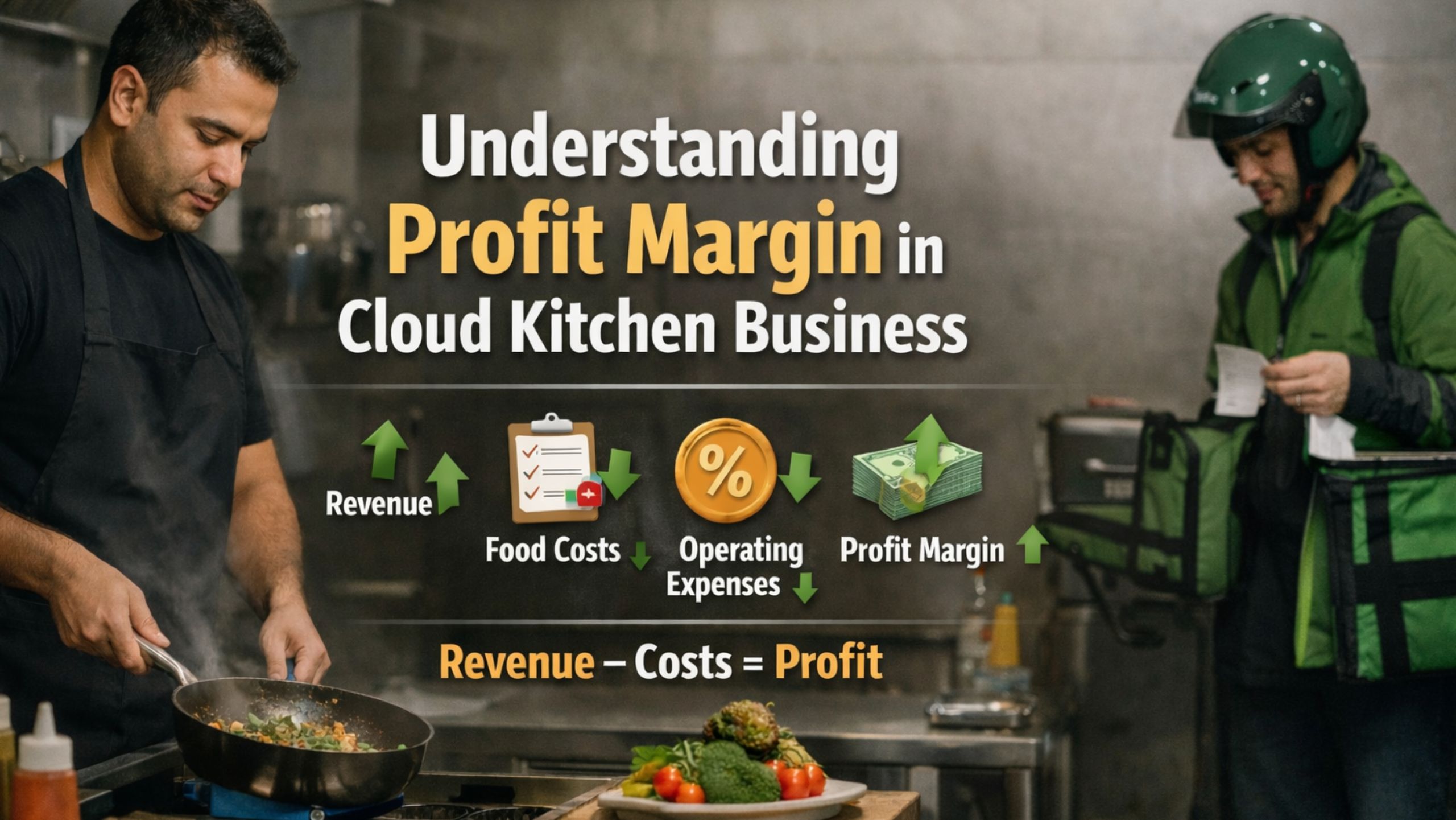
Understanding Profit Margin in Cloud Kitchen Business
Have you noticed how ordering food online has become as easy as sending a WhatsApp message? That’s exactly why cloud kitchens are booming across India! With food delivery apps growing faster than ever, thousands of smart entrepreneurs are jumping into the cloud kitchen business. But here’s the thing – before you invest your hard-earned money, you need to understand one crucial aspect: the profit margin in cloud kitchen business.
Think of it this way: if you’re planning a road trip, wouldn’t you check how much fuel you need and what it’ll cost? Similarly, understanding profit margins helps you know if your cloud kitchen will make money or burn through cash. Let’s dive deep into this exciting business model and learn everything about making it profitable!
What exactly is a Cloud Kitchen?
A cloud kitchen (also called a ghost kitchen or dark kitchen) is simply a commercial kitchen that prepares food only for delivery. There’s no dining area, no waiters, and no fancy decorations. You cook, pack, and send food directly to customers through delivery apps like Swiggy, Zomato, or your own delivery system.
Imagine running a restaurant minus all the headaches of managing a dining space. That’s a cloud kitchen for you!
How Do Cloud Kitchens Make Money?
Understanding how cloud kitchens make money is simpler than you might think. The cloud kitchen revenue model works like this:
- Order Through Apps: Customers place orders via a food delivery platform
- Prepare Food: Your kitchen team cooks the ordered items
- Pack and Deliver: Food is packed and picked up by delivery partners
- Receive Payment: Money comes through the app (minus their commission)
The beauty lies in the simplicity – no table service, lower staff requirements, and the ability to serve multiple areas from one kitchen.
Average Profit Margin in Cloud Kitchen Business in India
Now, let’s talk numbers! The cloud kitchen profit margin in India typically ranges between 15% to 25% after all expenses. Some well-run kitchens even achieve 30% or more. Compare this to traditional restaurants that usually see 5% to 15% profit margins, and you’ll understand why everyone’s excited about cloud kitchens.
Here’s a simple breakdown of what this means:
- If you sell food worth ₹100
- Your total costs are ₹75-85
- Your profit is ₹15-25
Breaking Down Cloud Kitchen Business Costs
Understanding cloud kitchen startup investment and ongoing costs is crucial. Let’s look at where your money goes:
1. Kitchen Setup and Equipment (One-time Investment)
- Basic kitchen equipment: ₹3-5 lakhs
- Kitchen setup and interiors: ₹2-3 lakhs
- Licenses and registrations: ₹50,000-1 lakh
2. Monthly Operating Costs
Food Ingredients (30-35% of revenue)
This is your biggest ongoing expense. If you sell a biryani for ₹200, ingredients might cost ₹60-70.
Delivery Platform Commissions (20-30%)
Swiggy and Zomato charge hefty commissions. On that ₹200 biryani, you might pay ₹40-60 as commission.
Packaging (5-8%)
Good packaging keeps food fresh and creates a great impression. Budget ₹10-16 per order.
Rent (10-15%)
Location matters, but not as much as traditional restaurants. You can operate from less expensive areas.
Staff Salaries (15-20%)
You need cooks, helpers, and someone to manage orders. This typically costs ₹50,000-1,50,000 monthly.
Marketing (5-10%)
Social media ads, discount offers, and promotional activities to attract customers.
Simple Profit Calculation Table
| Item | Amount (₹) | Percentage |
| Revenue per order | 300 | 100% |
| Food cost | -90 | 30% |
| Platform commission | -75 | 25% |
| Packaging | -20 | 7% |
| Rent (per order) | -30 | 10% |
| Staff (per order) | -40 | 13% |
| Marketing | -15 | 5% |
| Net Profit | 30 | 10% |
Note: This is a simplified example. Actual numbers vary based on cuisine, location, and efficiency.
Key Factors Affecting Your Profit Margin
Several factors can make or break your profit margin in cloud kitchen business:
1. Menu Design
Smart menu planning is like choosing the right players for a cricket team. Focus on dishes with:
- High demand
- Good profit margins
- Easy preparation
- Minimal wastage
2. Location Strategy
While customers won’t visit you, your location still matters for:
- Delivery radius coverage
- Rent costs
- Access to suppliers
- Availability of delivery partners
3. Order Volume
More orders mean better profits because fixed costs (like rent) get divided among more orders. Aim for at least 50-60 orders daily to break even.
4. Operational Efficiency
The faster and better you operate, the more money you make. This includes:
- Quick preparation times
- Minimal food wastage
- Efficient staff management
- Smart inventory control
Smart Tips to Increase Cloud Kitchen Profit
Want to boost your profits? Here are practical tips to increase cloud kitchen profit:
1. Create Your Own Ordering System
Build a simple website or WhatsApp ordering system to avoid platform commissions on repeat customers.
2. Focus on High-Margin Items
Beverages, desserts, and add-ons often have 70-80% profit margins. A ₹50 cold coffee might cost only ₹10 to make!
3. Optimize Your Menu
- Remove slow-moving items
- Price strategically (not too high, not too low)
- Create combo offers that increase order value
4. Negotiate with Suppliers
Buy ingredients in bulk and build good relationships with suppliers for better rates.
5. Reduce Wastage
Track what gets wasted and adjust your purchasing. Even saving 5% on ingredients significantly impacts profits.
6. Multi-Brand Strategy
Run 2-3 different cuisine brands from the same kitchen to maximize kitchen utilization.
Your Cloud Kitchen Journey Starts with The Rolling Plate
If you’re excited about starting your cloud kitchen but feel overwhelmed by all the planning, The Rolling Plate offers comprehensive solutions for aspiring food entrepreneurs. From kitchen setup guidance to menu planning and operational training, they help you navigate the complexities of running a profitable cloud kitchen in India. Their expertise in the cloud kitchen ecosystem can transform your culinary dreams into a thriving business reality.
Frequently Asked Questions
1. What is the minimum investment required to start a cloud kitchen in India?
You can start a basic cloud kitchen with ₹5-8 lakhs, including kitchen setup, equipment, licenses, and initial working capital.
2. How long does it take for a cloud kitchen to become profitable?
Most cloud kitchens break even within 6-8 months and start generating good profits by the end of the first year.
3. Can I run multiple brands from one cloud kitchen?
Yes! Running 2-3 different cuisine brands from one kitchen is a smart way to increase revenue and utilize resources better.
4. What is the average order value needed for good profit margins?
Aim for an average order value of ₹250-350. Higher order values mean better profit margins after covering fixed costs.
5. Do I need prior cooking experience to start a cloud kitchen?
While cooking experience helps, it’s not mandatory. You can hire experienced chefs and focus on business operations.
6. Which is more profitable – cloud kitchen or traditional restaurant?
Cloud kitchens typically offer better profit margins (15-25%) compared to traditional restaurants (5-15%) due to lower operational costs.
7. How much do food delivery platforms charge as commission?
Platforms like Swiggy and Zomato charge 20-30% commission on order value, depending on various factors.
8. What licenses are required to start a cloud kitchen in India?
You need FSSAI license, GST registration, fire safety certificate, and local municipal corporation trade license.
9. Can I start a cloud kitchen from home?
While possible for very small operations, commercial kitchens are recommended for scalability and compliance with regulations.
10. What type of cuisine offers the best profit margins?
Fast food, beverages, desserts, and popular local cuisines typically offer better margins than elaborate, ingredient-heavy dishes.
Your Recipe for Cloud Kitchen Success Awaits
Starting a cloud kitchen isn’t just about cooking great food – it’s about understanding the numbers that make your business sustainable. Now that you understand profit margin in cloud kitchen business, you’re already ahead of many who jump in blindly.
Remember these golden rules: keep costs under control, focus on customer satisfaction, and continuously optimize your operations. Whether you’re planning to start small with one cuisine or dream of building a multi-brand cloud kitchen empire, success comes from balancing passion with smart business decisions.
The cloud kitchen revolution in India is just beginning, and there’s plenty of room for innovative entrepreneurs like you. So, are you ready to turn your kitchen into a profit-making machine? The time to start is now!

Enquire Now
Recent Post





Other Blogs
Discover our latest news
and updates now.
Low Cost Food Franchise in India for First-Time Business Owners
October 21, 2026

Cafe Franchise in India: Investment, Space, Fees & How to Start
October 19, 2026
KFC Franchise in India: Investment, Requirements & Franchise Process
October 04, 2026