

Franchise vs Startup in India: Which Is Better for New Investors in 2026?
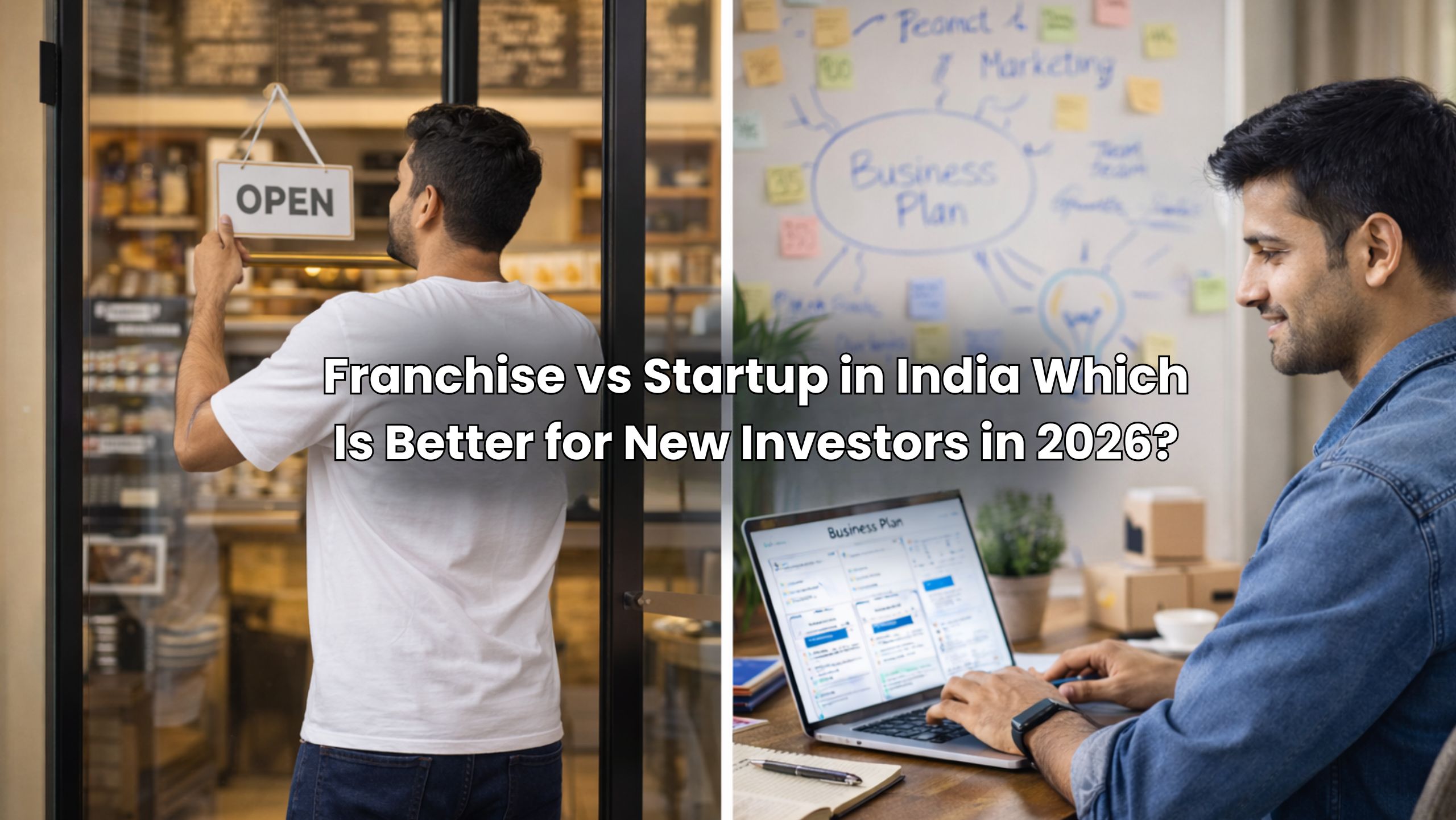
Franchise vs Startup in India: Which Is Better for New Investors in 2026?
Have you noticed how everyone around you is talking about starting their own business these days? You’re not alone! In 2026, more Indians than ever before are dreaming of becoming business owners. With India’s economy growing fast and new opportunities popping up everywhere, it’s the perfect time to jump into the business world.
But here’s where things get tricky. When you decide to start a business, you face a big question: Should you buy a franchise or start your own company from scratch? This choice between franchise vs startup in India can make or break your business dreams. It’s like choosing between following a recipe or creating your own dish – both can be delicious, but they need different skills and resources.
Let’s dive deep into this important decision and help you figure out which path is right for you!
What Is a Franchise Business?
Think of a franchise business in India like buying a ready-made business kit. When you buy a franchise, you’re paying to use someone else’s successful business idea, brand name, and proven system. It’s like getting a blueprint for success.
For example, when you see a McDonald’s or Domino’s Pizza, those are franchises. The owner didn’t create McDonald’s – they bought the right to run a McDonald’s restaurant in their area. The franchise company tells them exactly how to make the food, design the store, and serve customers.
What Is a Startup Business?
A startup business in India is completely different. It’s your own original idea that you build from scratch. You create everything – the name, the product, the way you sell it, and how you run the business. It’s like being an artist with a blank canvas.
Think of companies like Ola, Swiggy, or Paytm. These started as small ideas in someone’s mind and grew into big businesses. When you start a startup, you’re the boss of everything, but you also have to figure out everything yourself.
Key Differences Between Franchise and Startup
Understanding the franchise vs startup comparison helps you make a smart choice. Here are the main differences:
1. Brand Recognition
- Franchise: Comes with a famous name people already trust
- Startup: You build your brand from scratch
2. Business Model
- Franchise: Follow a proven system that already works
- Startup: Create your own way of doing business
3. Support System
- Franchise: Get training and help from the franchise company
- Startup: Learn everything yourself or hire experts
4. Rules and Freedom
- Franchise: Must follow strict rules set by the franchise owner
- Startup: Make your own rules and decisions
Investment Comparison: How Much Money Do You Need?
Money matters! Let’s look at what you need to invest in each option.
Franchise Investment
A franchise business in India typically needs:
- Initial franchise fee: ₹5 lakhs to ₹50 lakhs (or more)
- Setup costs: ₹10 lakhs to ₹1 crore
- Working capital: ₹5 lakhs to ₹20 lakhs
- Total: ₹20 lakhs to ₹2 crores (varies greatly)
Good news: You can find a low investment franchise in India starting from just ₹2.5 lakhs!
Startup Investment
Startup opportunities in India 2026 can be more flexible:
- Small startup: ₹50,000 to ₹5 lakhs
- Medium startup: ₹5 lakhs to ₹50 lakhs
- Large startup: ₹50 lakhs and above
Risk Factors: Playing It Safe vs Taking Chances
Every business has risks, but they’re different for franchises and startups.
Franchise Risks
- Less risky overall (proven business model)
- Still can fail if the location is bad or the management is poor
- Dependent on the franchise brand’s reputation
- Limited flexibility to adapt to local needs
Startup Risks
- Higher risk (no proven track record)
- 90% of startups fail in the first five years
- Everything depends on your decisions
- Can pivot and change quickly if needed
Profit Potential: How Much Can You Earn?
Everyone wants to know: “How much money can I make?”
Franchise Profits
- Steady but limited profit margins (usually 15-30%)
- Must share profits with franchise company (royalty fees)
- Predictable income after establishment
- Growth limited by franchise rules
Startup Profits
- Unlimited profit potential
- Keep 100% of profits (after taxes)
- May take years to become profitable
- Can scale rapidly if successful
Control and Creativity: Who’s Really the Boss?
This is where franchise vs startup in India shows the biggest difference.
Franchise Control
- Limited control over products, prices, and operations
- Can’t change menu items or services
- Must follow brand standards strictly
- Less stressful (decisions are made for you)
Startup Control
- Complete creative freedom
- Make all decisions yourself
- Can innovate and experiment
- More responsibility and stress
Quick Comparison Table
| Factor | Franchise | Startup |
| Initial Investment | Higher (₹20L-2Cr) | Flexible (₹50K-50L+) |
| Risk Level | Lower | Higher |
| Brand Recognition | Immediate | Build from zero |
| Profit Sharing | Pay royalties | Keep all profits |
| Creative Freedom | Limited | Unlimited |
| Support System | Strong | Self-dependent |
| Success Rate | 80%+ | 10% |
| Time to Profit | 6-18 months | 2-5 years |
Which Is the Best Business Option for New Investors?
For beginners in India, here’s what typically works best:
Choose a Franchise If You:
- Have more money to invest (₹20 lakhs+)
- Want a proven business model
- Prefer following systems over creating them
- Value brand recognition and support
- Want lower risk and steady returns
Choose a Startup If You:
- Have limited funds but great ideas
- Love creating new things
- Want complete control
- Are willing to take risks
- Dream of building something big
Real Examples from India
Successful Franchise Story:
Ramesh from Pune invested ₹25 lakhs in a Subway franchise in 2024. Following their system, he broke even in 8 months and now earns ₹2 lakhs profit monthly.
Successful Startup Story:
Priya from Bangalore started a homemade cosmetics business with just ₹2 lakhs in 2023. She now has 50 employees and earns ₹15 lakhs monthly.
Discover Smart Food Business Opportunities with The Rolling Plate
If you’re interested in the food industry, The Rolling Plate offers exciting franchise opportunities that combine the best of both worlds. They provide the security of a franchise model with enough flexibility for local innovation. Their low investment options and strong support system make it perfect for first-time investors looking to enter the booming food business sector in India.
Practical Tips for First-Time Investors
- Start with research – Study your local market for 3-6 months
- Talk to existing owners – Both franchise owners and startup founders
- Calculate carefully – Include all hidden costs
- Test your idea – Try a small pilot before going big
- Get family support – Business affects your whole family
- Keep learning – Attend workshops and read business books
- Have backup funds – Keep 6 months of expenses saved
Your Business Journey Starts with One Decision
So, what’s it going to be – franchise or startup? There’s no one-size-fits-all answer. The best choice depends on your money, skills, risk appetite, and dreams.
Remember, successful businesses aren’t built overnight. Whether you choose a franchise business in India or chase startup opportunities in India 2026, success comes from hard work, smart decisions, and never giving up.
Take time to think about what you really want. Talk to your family. Do your homework. Then take that first brave step. Your future customers are waiting for the amazing business you’re about to create!
Frequently Asked Questions
1. Which is more profitable – franchise or startup in India?
Startups have unlimited profit potential but take longer to become profitable. Franchises offer steady but limited profits, typically starting within 6-18 months.
2. How much money do I need to start a franchise in India in 2026?
Most franchises need ₹20 lakhs to ₹2 crores, but some low investment franchises start from ₹2-5 lakhs.
3. What is the success rate of franchise vs startup in India?
Franchises have an 80%+ success rate while startups have only 10% success rate in the first five years.
4. Can I convert my startup into a franchise later?
Yes! Many successful startups like Chai Point and Wow! Momo became a franchise business after proving its concept.
5. Which is better for someone with no business experience?
Franchises are generally better for beginners due to training, support, and proven systems.
6. Do I need to pay royalty in a franchise business forever?
Yes, most franchises charge 5-10% royalty on sales as long as you operate under their brand.
7. Can I run both a franchise and startup simultaneously?
Yes, but check your franchise agreement first. Some franchises restrict other business activities.
8. Which option gives faster returns on investment?
Franchises typically give faster returns (6-18 months) compared to startups (2-5 years).
9. Is it easier to get a bank loan for a franchise or a startup?
Banks prefer lending to franchises due to lower risk and proven business models.
10. What happens if my franchise company shuts down?
Your franchise agreement should cover this. Usually, you can continue operating independently or get compensation.

Enquire Now
Recent Post




Other Blogs
Discover our latest news
and updates now.
Low Cost Food Franchise in India for First-Time Business Owners
October 21, 2026
Cafe Franchise in India: Investment, Space, Fees & How to Start
October 19, 2026

KFC Franchise in India: Investment, Requirements & Franchise Process
October 04, 2026